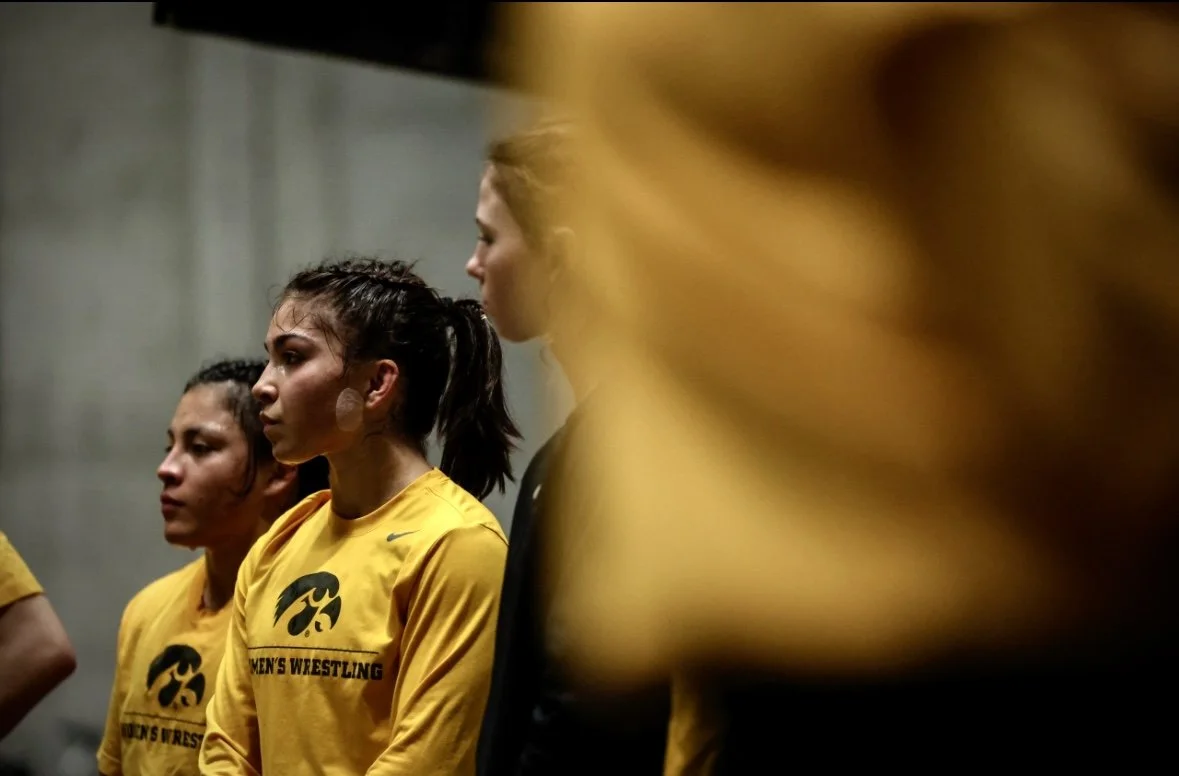
Return to Sport Reflections
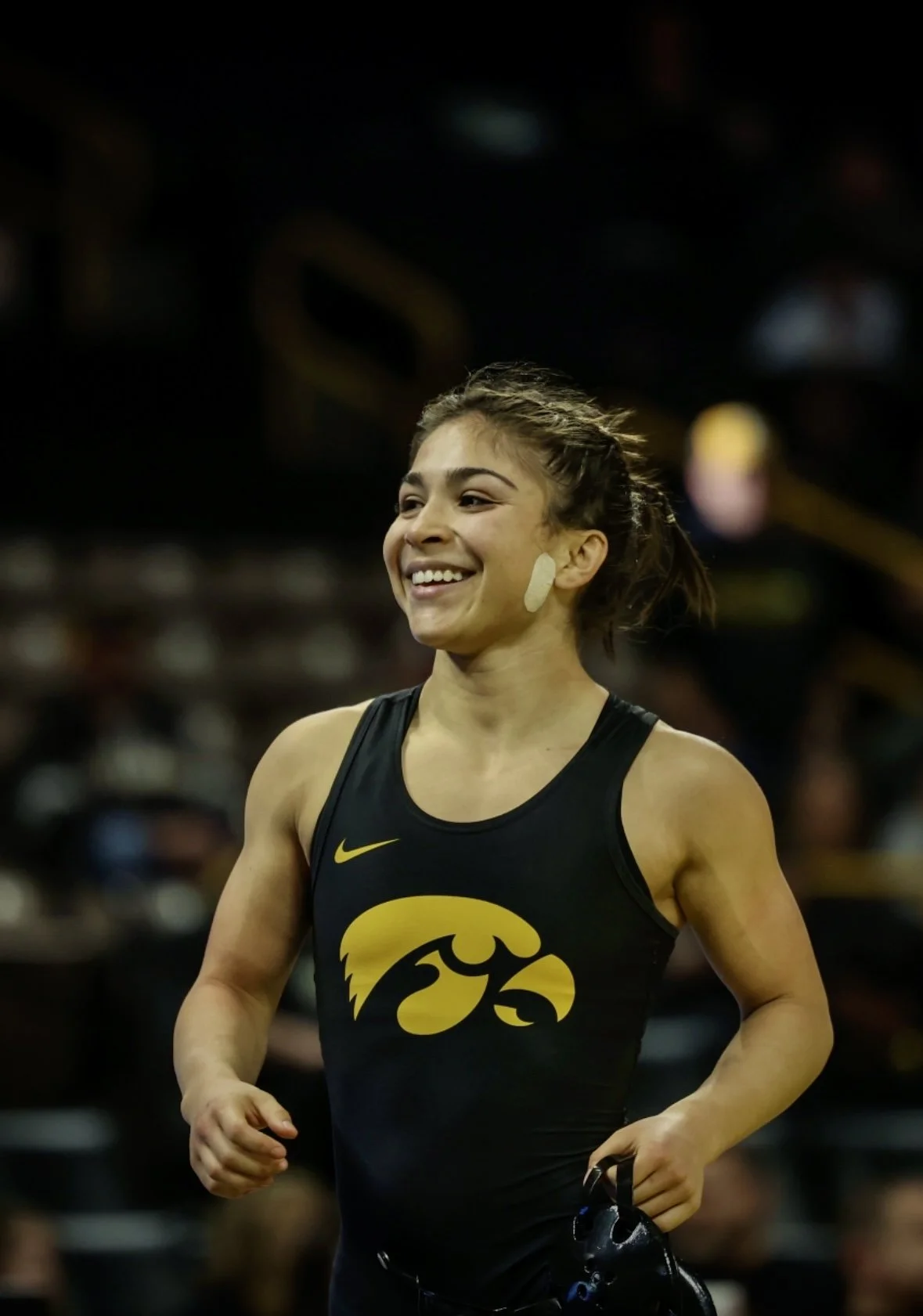
Photo by Myles Harris — Iowa vs. Colorado Mesa Home Dual
The Return-To-Sport Map: THE QUESTIONS I ASK BEFORE RETURNING
— THE 5 TRUST FACTORS
Body trust
Do I believe my body can handle the task?
What movements still feel unsafe?
What movements feel strongest right now?
Skill Trust
Do I trust my technique under fatigue?
What breaks down when I’m tired?
What do I need reps on before I go full speed?
Chaos Trust
Can I react when it’s unpredictable?
Am I ok with quick changes or contact?
What’s my next “controlled chaos” step?
Environment Trust
Does the setting support my return?
Who makes me feel rushed? Pressured?
Who makes me feel safe and focused?
Self Trust
Do I trust my decisions?
Will I speak up and advocate for myself if something feels off?
What boundary do I need this week?
Returning isn’t a moment. It’s a series of firsts.
Being “cleared” doesn’t automatically mean you feel confident, aggressive, or like yourself again. This page helps you rebuild trust - one rep, one practice, one decision at a time.
Quick note: As stated in every page, this is not intended to be medical advice. If you have swelling, sharp pain, instability, or concerns, talk to your PA/AT/doctor.
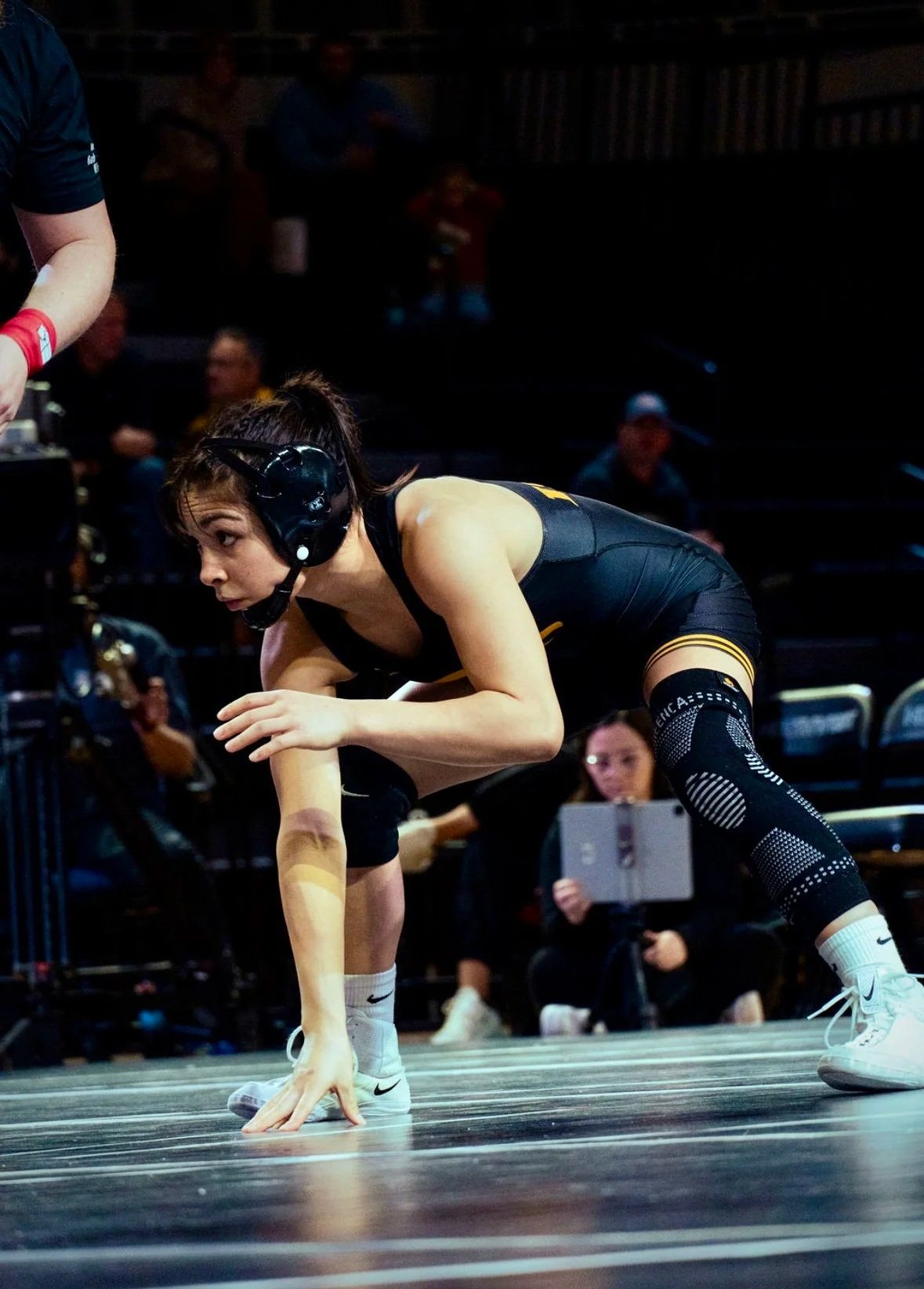
Photo by Suri Sithep
“My Firsts” Reflection Cards
-
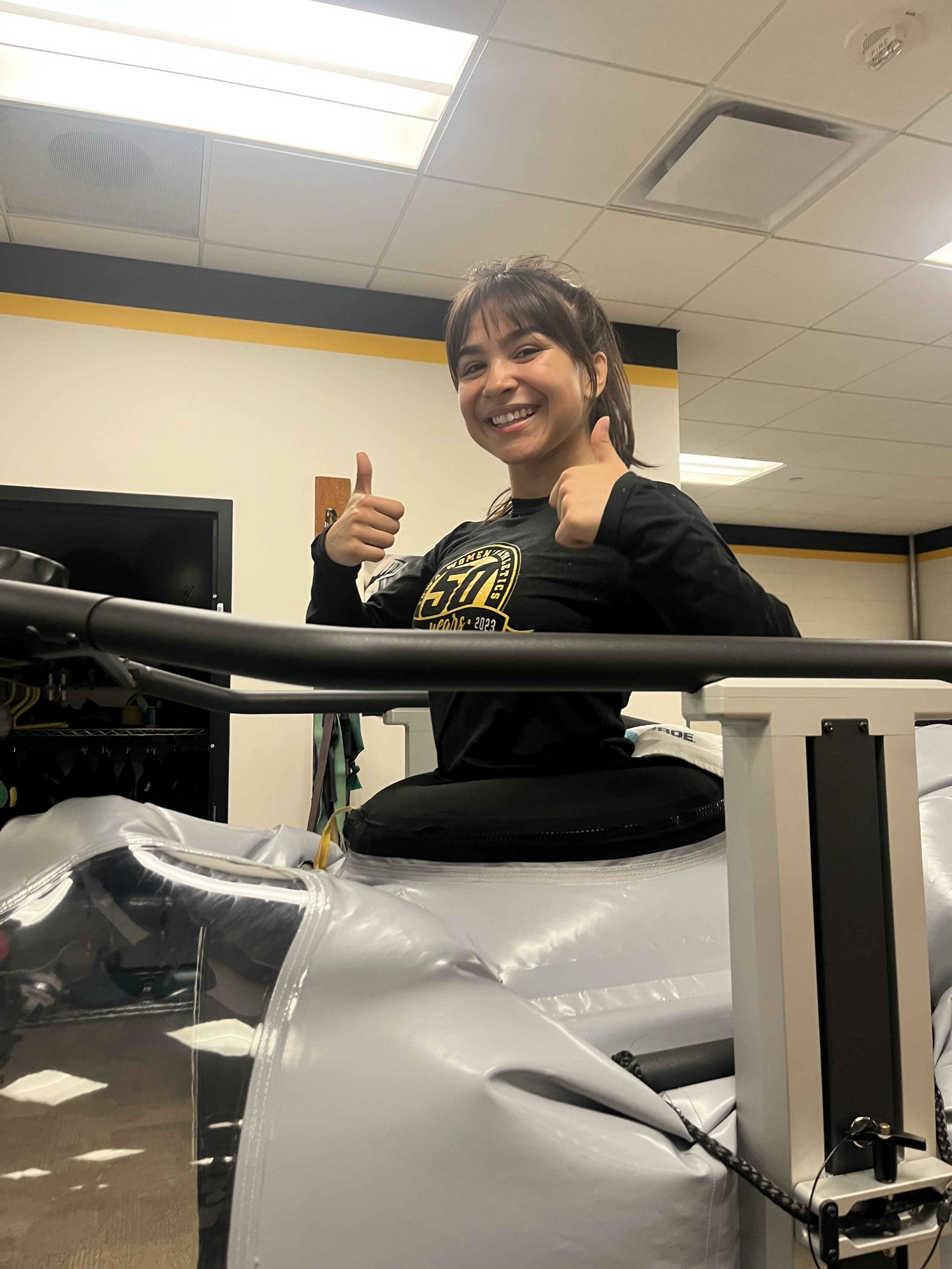
My first real run back wasn’t some movie moment on a track with a stopwatch. It was me and Lauren in the anti-gravity machine—lights overhead, belt strapped in, the kind of setup that reminds you you’re still earning this.
At first it was careful. Not scared—just precise. I was obsessively aware of my foot placement like each step was a test I couldn’t afford to fail. Am I landing even? Am I drifting? Is my body trying to trick me? My brain was tracking everything.
Then something shifted. I found a pace that was tolerable—fast enough that it stopped feeling like rehab and started feeling like movement again. Not a jog that apologizes. Actual rhythm. And that freedom hit hard: the simple fact that I could move faster than a snail’s pace again. It wasn’t about distance. It was about proof. A few laps, and suddenly the door cracked open—running is coming back to me.
The win: not speed—trust.
-
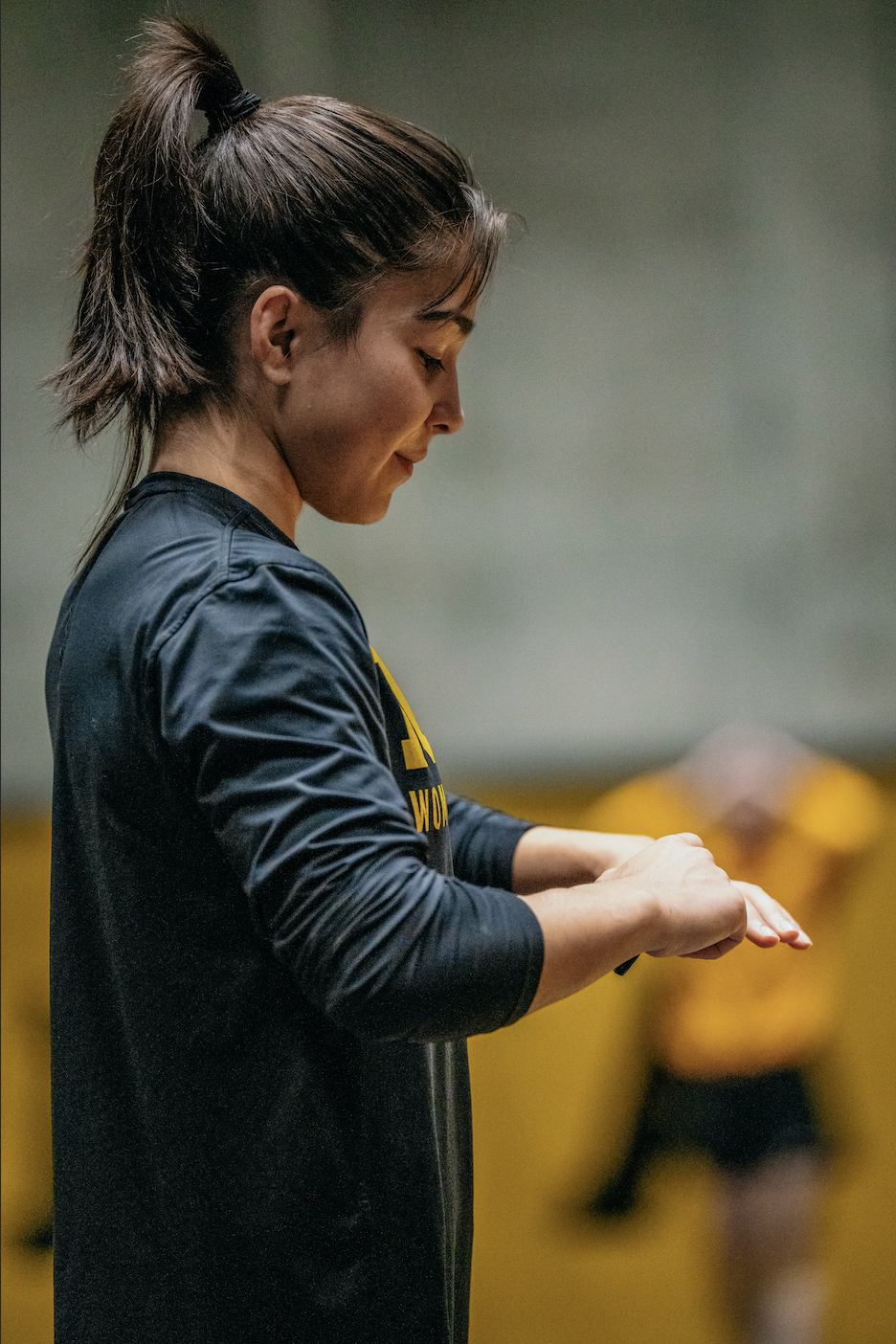
The first practice back didn’t start with fear. It started with joy.
The second I got to wrestle again, it felt like my body exhaled. Like something that had been on pause finally clicked back on. I was happy in a way that’s hard to explain unless you’ve had something taken from you and fought to get it back.
But I was also utterly aware of my body. Every position, every shift of weight, every reaction—I felt everything. And the surprising part? I trusted my movement. I wasn’t waiting for my knee to betray me. I felt capable.
That’s exactly why intentions mattered. Because the moment I felt good, my speed wanted to take over. My instincts wanted to go full send like nothing ever happened. And I had to coach myself in real time: Slow down. Stay smart. Stack the day.
So I walked in with a plan. What I was doing full speed. What I was limiting. What “winning” looked like. Not proving anything. Not dominating practice. Winning was leaving the room with momentum—so I could come back tomorrow and do it again.
The lesson: the most dangerous moment isn’t when you feel scared—it’s when you feel great. That’s when discipline protects the comeback.
-
My first competition back was nerve-wracking. Not the “butterflies” kind—real nerves. And it was strange. Strange to feel adrenaline like that again. Strange how fast the environment flips a switch in your body, like your nervous system remembers the stakes before your mind catches up.
Standing there, it wasn’t just about wrestling. It was about the noise in my head trying to check everything at once: Is it stable? Do I feel the same? What if it feels weird? What if I hesitate?
But here’s what I realized: I didn’t actually know I was ready on competition day. I knew I was ready before that—during practice—when I could train hard and not think about my knee at all. Not monitor it. Not negotiate with it. Not protect it.
That’s the real return. When your sport takes up all the space in your mind again—because your body has earned your trust back.
And stepping out there, even with nerves, I understood something deeper than “being cleared”: I wasn’t chasing perfection. I was claiming evidence. I had built enough proof to walk into chaos and stay myself.
The win: not a result—a return.
The Controlled Chaos Progression
The Controlled Chaos Progression is the roadmap my athletic trainers and I collaborated on to return the right way. Coming back isn’t just about being “cleared”—it’s about rebuilding trust as the environment gets more unpredictable. Each step increases the level of chaos (speed, fatigue, reaction, contact, pressure) in a controlled way so you can stack clean reps without rushing. The goal isn’t to prove you’re back in one day—it’s to earn it through consistent sessions that your body and mind respond to well.
How I Used It: I moved onto the next step only when I hit the “Win Condition”and my body responded well 24 hours later.
What is the “Win Condition” ? (It includes all the following below)
No increase in swelling
No sharp pain
No instability/”giving out”
Movement quality stays solid (you’re not compensating)
Confidence improves even slightly (you’re not freezing or avoiding)
24 Hour Rule: If my symptoms spiked the next day, I would go back a step, reduce my volume and load, and readjust.
STEP 1 — MECHANICS (ZERO CHAOS)
What this is: controlled, predictable movement
Examples: linear jogging, controlled footwork, technique reps, strength patterns, basic change-of-direction at low speed
What I Focus On: Clean movement + body awareness
I Asked Myself :“Can I move without guarding?”
STEP 2 — MECHANICS UNDER FATIGUE (LOW CHAOS)
What this is: same movements as Step 1, but slightly fatigued
Examples: short intervals + technique, drill circuits that raise heart rate.
What I Focused On: technique stays clean when fatigue hits.
I Asked Myself: “Does my form collapse when I’m tired?”
STEP 3 — REACTIVE MOVEMENT (MODERATE CHAOS)
What is this: unpredictability without contact
Examples: partner cue drills, reaction lights/calls, mirror drills, random change-of-direction, ball/tracking drills.
What I Focused On: reaction speed without panic or stiffness
I Asked Myself: “Can I react without overthinking?”
STEP 4 — CONTROLLED CONTACT / LIVE PLAY (HIGH CHAOS)
What this is: contact introduced, but rules keep it safe and specific.
Examples: positional live, limited ranges, tempo-controlled reps, light-to-moderate contact, reduced intensity rounds.
What I Focused On: tolerate contact + regain aggression in controlled settings.
I Asked Myself: “Can I take contact and stay composed?”
STEP 5 — FULL PRACTICE, MANAGED VOLUME (NEAR GAME CHAOS)
What this is: full-speed practice, but you control total load.
Examples: full training with rep limits, sit out certain drills, reduced live rounds, planned breaks, modified minutes.
What I Focused On: perform at speed while staying smart.
I Asked Myself: “Can I go full speed and still protect myself?”
STEP 6 — COMPETITION SIMULATION → FIRST COMPETITION (FULL CHOAS)
What this is: the closest thing to competition before the real thing.
Examples: match/game simulation, situational pressure reps, full live with scoring/time, travel-day simulation, adrenaline practice.
What I Focused On: execution under pressure + post-performance recovery.
I Asked Myself: “Can I handle adrenaline and still trust my body?”
A Quick Note About Pressure & Boundaries
Pressure showed up before confidence did. I felt it the second I stepped back into practice—like I had to prove I was the same athlete, fast. But pressure is only dangerous when it starts driving your decisions. I learned I needed boundaries, not motivation.
For me, that meant having a plan before I walked in: what I was doing full speed, what I was limiting, and what counted as a win that day. Some days the win was getting through practice without swelling the next morning. Other days it was taking one more “tricky” rep without hesitating.
The fastest way back wasn’t trying to look normal. It was stacking consistent days until my body—and my mind—started trusting me again.
The 60 Second Reflection (after every session)
As I navigated the steps, I made it a habit to either think about or jot down a reflection after every practice or competition:
What step was I on today?
What felt solid?
What movements felt tricky or alarming, and why?
What’s one adjustment I can make before next practice? Next competition?
***IMPORTANT (24 hours later): How is my body responding from yesterday’s training? Combat?
A Quick Exercise I did…
I feel pressure from: (coach / team / myself / timeline / scholarship / social media)
Pressure shows up as: (overtraining / hiding pain / rushing / skipping recovery / proving)
What I control this week: [fill in]
Boundary I’m setting: [fill in]
Reset Protocol
Bad days happen. They don’t mean you’re failing. When I was returning onto the mat, I had a few really rough days in between great ones. A “rough day” can be pain, swelling, stiffness, weird confidence, hesitation, or just feeling off. My goal wasn’t to power through or shut down - it was to readjust fast and protect momentum. In these situations, when your body responds negatively and out of your control, the only course of action is readjustment.
#1 - Identify What Kind of Bad Day It Is
Physical red flag - swelling, pain, instability, catching/locking, or changes in your mechanics
Load response - not sharp, more like heaviness, soreness, fatigue, tightness
Nervous System - mentally you’re tight: hesitation, panic spikes, freezing on contact, overthinking, not trusting reaction
Life stress - Sleep, travel, academics, relationship stress, nutrition/hydration are off, so your system feels under-fueled.
#2 - The Non-Negotiable Safety Check
If I had any of these, I didn’t “test it” - I pulled back and talk to my AT/PT/Doctor
Sharp pain
instability/giving way
Swelling that’s significantly worse than normal
locking/catching
You can’t move without limping/compensating
If none of these were present, I’d proceed by adjusting my training.
#3 - Adjust, Don’t Quit
When it wasn’t a red flag, I’d modify one or more of these:
Intensity: go from 100% → 70-85%*
Volume: reduce rounds/reps/minutes by 25-50%*
Chaos: drop to a lower step (less reaction/contact)
Lauren’s rule:
You can keep training if you can move clean. If you’re overcompensating heavily, you’re not “tough” - you’re practicing bad movement.
* = these were the % benchmarks I used. Work with your AT/PT/Doctor on what percentages might work best for you.
Note: Bad days trigger comparison. Don’t negotiate with that mindset. Control the negative talk, then redefine the win for the day. Champions don’t panic when the plan has to change — they stay in control, adjust, and still leave with progress. On the days you need it most, success might simply be showing up, moving clean, and protecting tomorrow.
Final Note… The secret to staying back is staying consistent
Getting cleared is one movement. Staying back is a habit: manage your load, keep strength work in your week, and keep rebuilding trust even after you feel “fine.”