Nutrition Foundations
The Recovery Nutrition Toolbox (from a healing athlete)
When I got injured, I thought nutrition was going to be the easy part. Train less → eat a little less → done.
That was… not how it went.
Recovery messed with everything: my routine, my appetite, my mood, my confidence, even my patience. And the weird part is your body looks like it’s “resting,” but it’s actually doing construction work 24/7 — rebuilding tissue, rebuilding strength, and trying to keep you mentally stable through it all.
So this page isn’t me telling you what to do. I’m not a dietitian.
This is what helped me as a recovering athlete, what I wish someone had simplified earlier, and a few options you can test and personalize.
⚠️ Disclaimer: Educational only. Not medical advice or a personalized plan. Healing needs change based on injury, surgery, medications, and your history. If you want personal targets and a plan that fits your situation, a licensed sports dietitian + your healthcare team is the best direction.
How to use this toolbox (without turning food into another full-time job)
This is how I want you to use this page:
pick one thing
try it for a week
pay attention to how you feel in rehab, your energy, your cravings, your mood
keep what works, drop what doesn’t
Because recovery is already enough. Nutrition shouldn’t become another place to feel behind.
The mindset shift that changed things for me
When you’re injured, it’s easy to think: “I’m not burning as much, so I should eat less.”
But in my experience, healing isn’t passive. It takes energy. And when I under-ate, I didn’t just feel “lighter” — I felt:
more tired
more irritable
more snacky later
and honestly… rehab felt harder
Reframe I used:
Rehab rebuilds function. Nutrition supplies the materials.
If you’re overwhelmed, start here (my “minimum standard”)
On my lowest-energy days, I stopped aiming for “perfect.” I aimed for “enough to stay steady.”
My simple baseline looked like:
3 eating moments (meals or mini-meals)
at least 2 of them included protein + carbs
water earlier in the day (before I felt awful)
That’s it. Small, repeatable wins.
Real Life During Recovery
This is what it looked like for me — messy, human, and overwhelming.
What surprised me most:
• My appetite didn’t match what my body needed.
• I could feel the difference in rehab when I showed up under-fueled.
My easiest upgrade:
• I picked one meal (breakfast or lunch) and made sure it had a clear protein source.
• That one change made my energy feel more stable.
Low appetite day “still counts” options:
• Smoothie / yogurt bowl / oatmeal / soup + bread
• Smaller portions — but keep protein + carbs in the mix
My hydration cue:
• Your sign you’re behind — headache, fatigue, constipation, dark urine, etc.
• My fix: morning water with electrolytes + refill by midday
My mini reminder: Rehab counts as training. Fueling supports my build.
If you need personal guidance:
A sports dietitian + your healthcare team can tailor this to your injury and goals.
The Recovery Plate + Consistency (no tracking, no perfection)
This is the section I wish someone had handed me in week one.
Because during recovery, the problem usually isn’t knowledge — it’s consistency. Appetite shifts. Life gets chaotic. You go from training structure to… none. And suddenly you’re skipping meals without even trying to.
The Recovery Plate (my no-stress template)
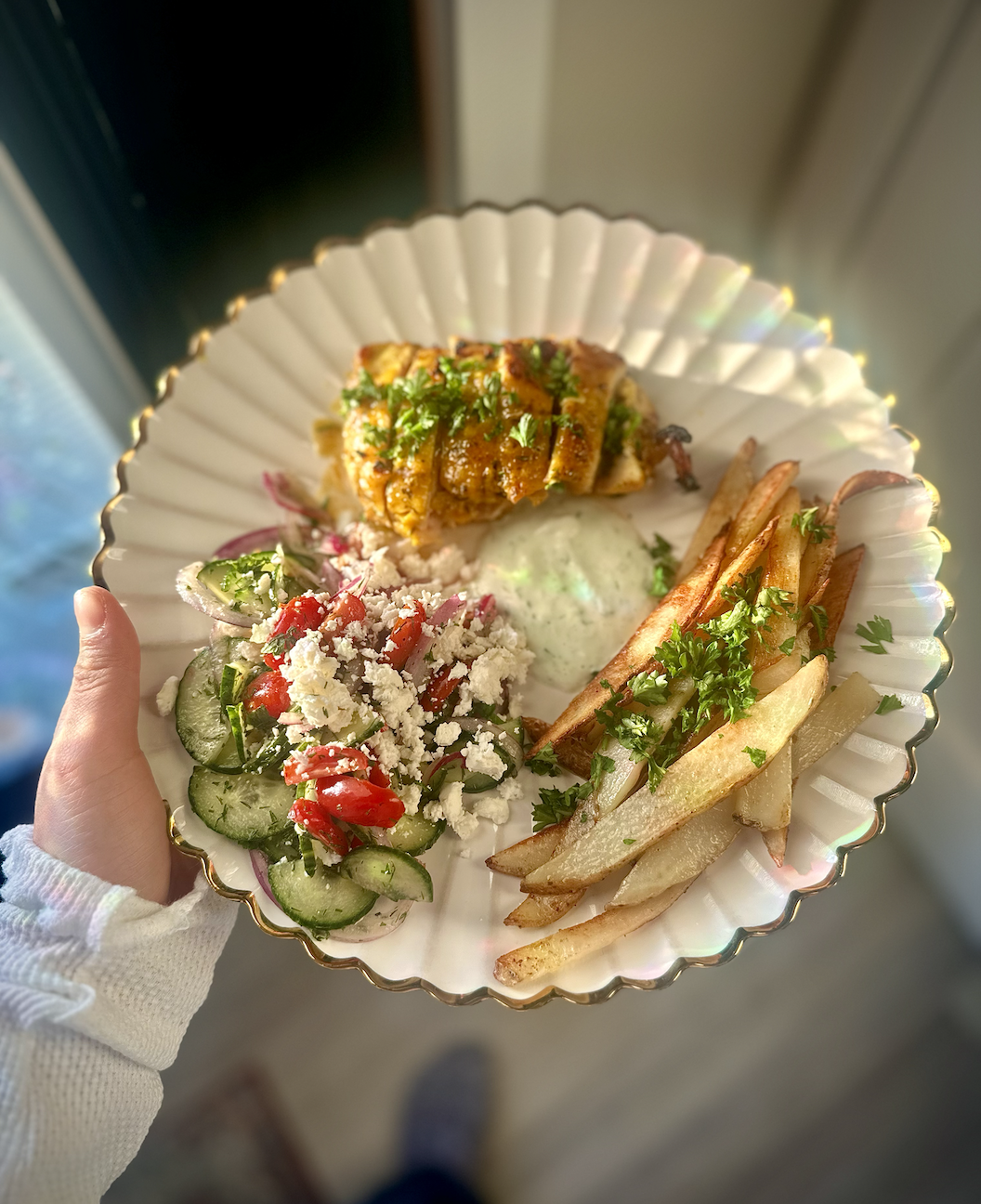
Most meals I tried to build around four parts — not because I’m strict, but because when one part is missing, I feel it later.
Protein (repair + strength protection)
Eggs, Greek yogurt, chicken, fish, tofu, beans, cottage cheese
Carbs (rehab energy + recovery capacity)
Rice, oats, potatoes, pasta, bread, tortillas, cereal, fruit
Color (micros + fiber)
Literally anything that’s doable: fruit, salad, frozen veg, cooked veg, smoothies
Fats (support + satisfaction)
Olive oil, avocado, nuts, seeds, nut butter, cheese, eggs, fatty fish
How I kept this “real” instead of rigid:
If a full plate felt like too much, I shrunk the portion — I didn’t delete entire food groups.
Consistency > Intensity
Recovery taught me this: one “perfect” day doesn’t fix five inconsistent ones.
I started focusing on not letting long gaps happen. When I waited too long, I’d end up:
feeling flat
ravenous later
or stuck in that weird “I’m hungry but nothing sounds good” loop
What helped: having defaults I didn’t have to think about.
PERSONAL REFLECTION: I STOPPED SHOWING UP EMPTY
At one point in recovery, I treated PT like it “didn’t count.” I’d go in under-fueled and wonder why the session felt heavier than it should.
Under-fueling is the most common injury-recovery mistake (Read More)
Rehab is work. If I want my body to rebuild, I have to support the work.
So I built a simple standard: something in before rehab — not a full meal, not a perfect plan, just fuel.
My go-to options:
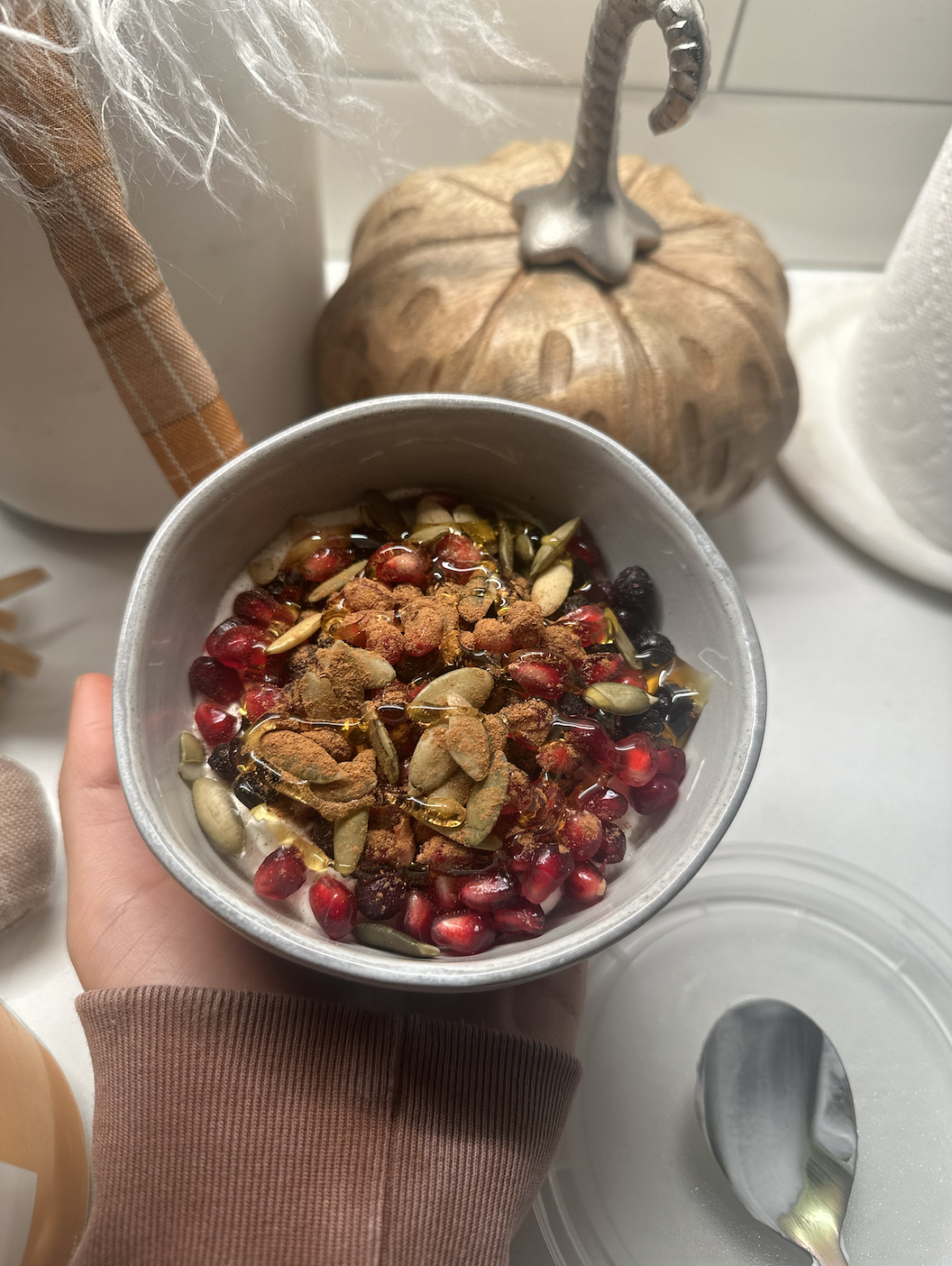
Greek yogurt bowl (fruit, granola, and honey)
Toast with peanut butter, banana, honey, and cinnamon
Iced Matcha or Coffee (with vanilla bean protein powder)
Hard Boiled Eggs + Fruit (Usually always in my fridge)
Tuna salad or egg salad with crackers (easy to prep and snack on)
Smoothie (My favorite combo: Wild blueberries, banana, vanilla bean protein powder + collagen, cinnamon, vanilla extract, milk of choice, and honey)
Rehab Day Support
Fueling for PT without making it complicated
I started treating PT like training — because it is. It’s stress you’re asking your body to adapt to, and adaptation requires support.
Before rehab: the standard
I stopped walking into rehab on empty. Not because I needed a perfect routine — because I wanted the session to actually count.
Quick self-check before PT:
Have I eaten in the last 3–4 hours?
Do I feel clear-headed or already flat?
Am I hydrated, or behind?
If the answer is “no,” the move isn’t to grind through it. The move is to make a small adjustment.
After rehab: same-day support
Rehab doesn’t end when the session ends. If I didn’t refuel, I’d feel it later — energy drop, mood drop, and a harder time bouncing back.
What I aimed for after PT:
A real next meal or snack (not perfection, just follow-through)
A complete plate when possible
An easier option if appetite was low
The point
This isn’t about earning food. It’s about supporting the work your body is doing — so you can recover from rehab, not just survive it.
When to loop in a pro (supportive, not scary)
I want this to be really clear: getting help doesn’t mean you failed. It means you’re taking recovery seriously.
Consider reaching out to a sports dietitian or healthcare provider if you’re dealing with:
persistent low appetite that makes it hard to eat consistently
dizziness/fainting or feeling unwell
rapid unintended weight loss
GI symptoms that don’t improve
missed periods or major cycle changes
anxiety around food/body that’s affecting daily life or recovery
Questions you can bring (athlete-friendly):
“What should I prioritize for my injury without tracking?”
“My appetite is low — what are easy ways to meet recovery needs?”
“What should a rehab-day meal look like for me?”
“Are there nutrients I should pay attention to for my situation?”
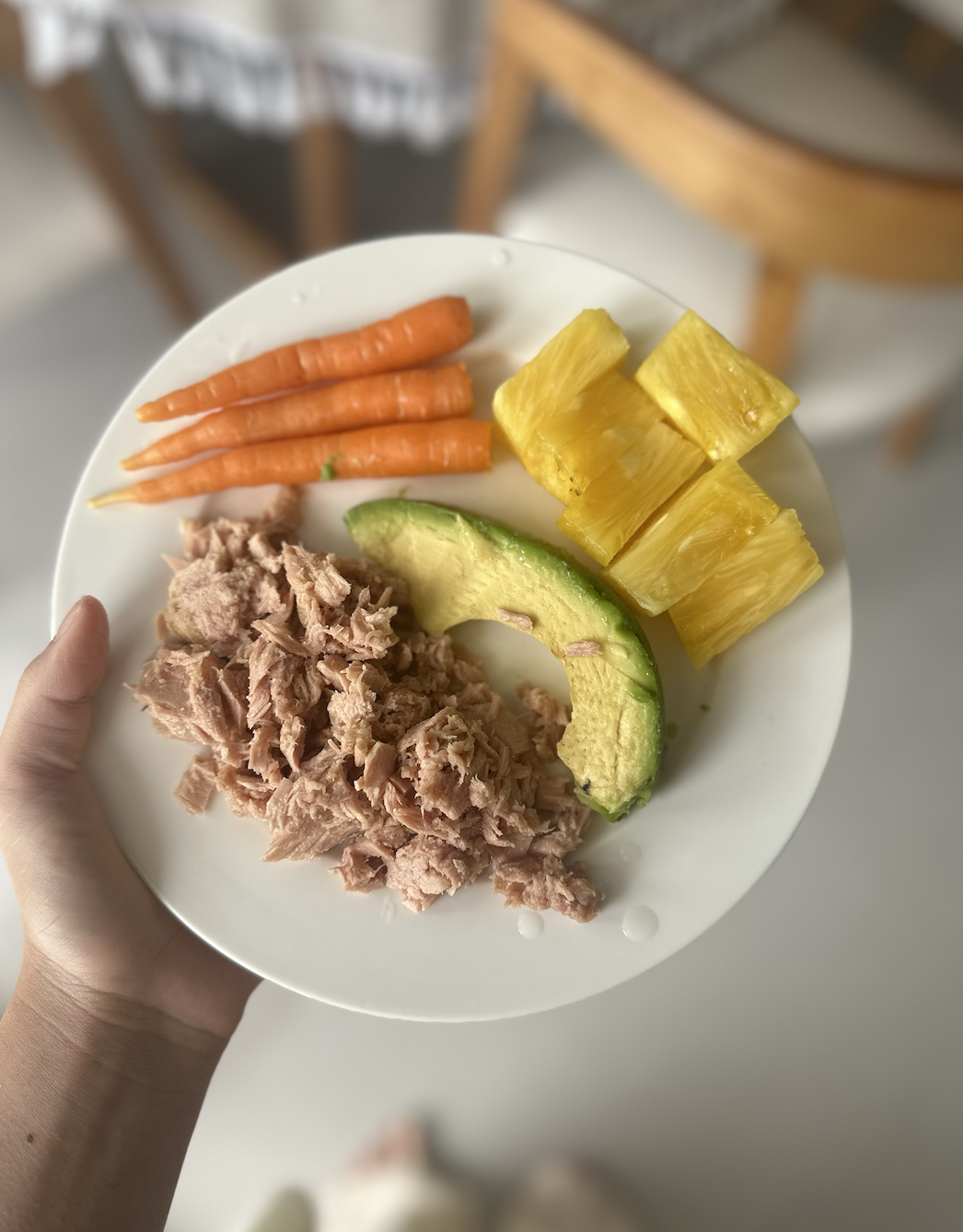
Light Recovery Plate: Wild Caught Tuna (Protein), Avocado (Fats + Color), Pineapple (Carbs + Color), & Carrots (Color)
Expert-Backed Resources I Used During My Recovery
As a big researcher with a curious mind, I wanted to seek out the best resources to support my nutrition while recovering. The following are some of the most credible and helpful sources I utilized:
ASPDA - Downloadable Resources
Why I like this resource: ASPDA is strong because it’s built by sports/performance dietitians who work directly with athletes, so the content stays practical and sport-relevant (not generic wellness). Their Downloadable Resources are especially useful—including “Sport & Performance Specific” handouts and “Fueling & Recovery” materials that translate nutrition into quick, athlete-friendly tools. And when someone needs more than education, ASPDA also maintains a Full-Time Sports Dietitian List, which gives athletes a credible direction for finding qualified support instead of guessing online.
NATA (National Athletic Trainers Association)
Why I like this resource: This is one of the most practical injury-nutrition overviews I’ve found because it’s written for the rehab timeline, not just “performance.” It breaks down what matters most in the first 48 hours (common under-fueling, managing post-op nausea/constipation, rebuilding muscle during immobilization, and simple anti-inflammatory food swaps), then moves into continued recovery (protein distribution, alcohol considerations, and when it’s time to refer out). It also includes injury-specific notes (concussion, bone, tendon/ligament) plus concrete tools like a sample meal plan and a rehab-friendly smoothie recipe—useful as examples, not rules.