ACL INJURY & PREVENTION
Why female athletes tear their ACL at higher rates — and what the research says about changing that.
THE NUMBERS
ACL injuries are among the most common and debilitating knee injuries in professional athletes, with an incidence in female athletes up to eight times higher than their male counterparts. For a student athlete navigating cutting, pivoting, and contact sports, that statistic isn't abstract — it's personal.
I've torn my ACL three times. I know exactly what those numbers feel like from the inside. And I also know that understanding why this happens is the first step toward changing it.
WHY FEMALE ATHLETES ARE AT HIGHER RISK
The gap between male and female ACL injury rates isn't random — it's driven by a combination of factors that are now well understood by researchers, even if that knowledge hasn't fully reached athletes and coaches yet.
Anatomy — Female athletes generally have a wider pelvis relative to their height, which creates a larger Q-angle — the angle between the hip and the knee. This geometry places more stress on the ACL during dynamic movements like cutting and landing.
Neuromuscular patterns — Under fatigue, females show a greater trend of increased knee abduction angles compared to males — meaning the knee collapses inward more significantly when tired. This pattern, known as dynamic knee valgus, is one of the most well-documented bio-mechanical contributors to ACL injury risk in female athletes.
Female athletes also tend to have lower hip abductor strength relative to body weight and greater knee adduction during single-leg landing compared to male athletes — a landing strategy that increases stress on the ACL during sport activity.
Puberty and maturation — Research shows that ACL volume stops growing around age 10 — before puberty — but body mass continues to increase after puberty, requiring greater muscle forces during dynamic movement. The result is that a post-pubertal female may have an ACL of similar size to a younger athlete but with significantly higher forces being applied to it. This mechanical mismatch is consistent with the documented rise in ACL injury rates in females aged 15 to 19 — and it's one of the clearest explanations for why neuromuscular training introduced early matters so much.
Hormonal factors As covered in the Hormones & Your Cycle page, estrogen and relaxin fluctuations across the menstrual cycle affect ligament laxity and neuromuscular control — adding another layer of risk that male athletes simply don't face.
WHAT PREVENTION ACTUALLY LOOKS LIKE
The research is clear: the patterns that put female athletes at higher risk for ACL injury are modifiable — and they can be addressed before an injury ever happens.
Studies across soccer, basketball, volleyball, and handball have shown that structured neuromuscular training programs designed specifically for female athletes can significantly reduce non-contact ACL injury rates. The most effective programs share the same core components regardless of sport:
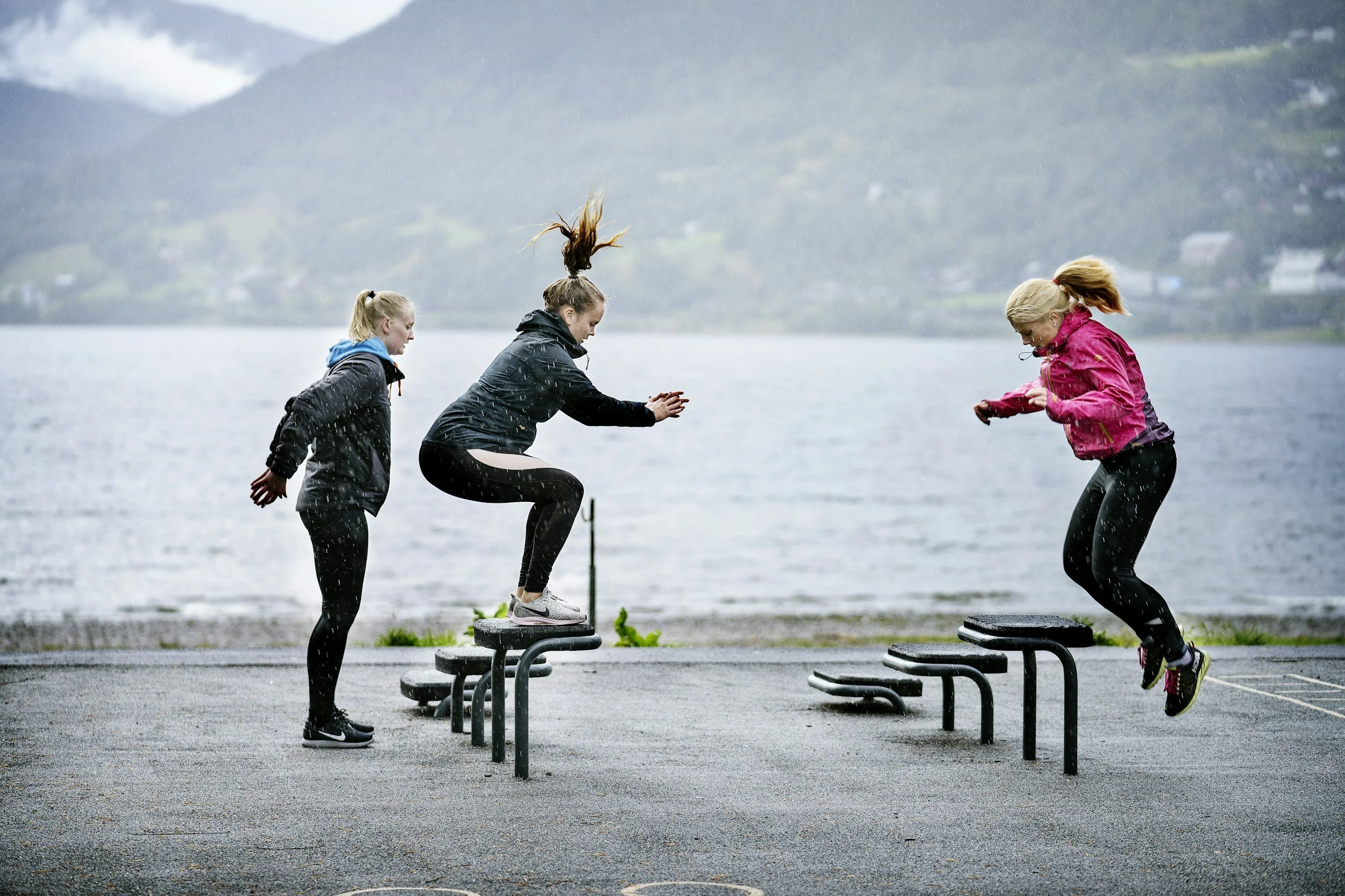
Plyometrics — jump and landing training that builds explosive neuromuscular control, with emphasis on proper mechanics and increasing difficulty over time
Landing technique correction — teaching athletes to land with knees over toes, hips and knees sufficiently flexed, avoiding knee valgus and landing softly
Hamstring strengthening — the hamstrings provide an opposing force to anterior tibial displacement, making them critical for ACL protection
Hip and glute strengthening — strengthening hip abductors helps reduce knee valgus, one of the most common mechanisms of ACL injury in female athletes
Balance and proprioception — improving joint stability and neuromuscular timing at ground contact
Core strengthening — stabilizing trunk motion during dynamic movements
Feedback and education — athletes need to understand what proper and improper mechanics look like, ideally with a partner, coach, or video providing real-time correction
When and how to do it: The research suggests starting 6 weeks before the season for maximum benefit. Sessions can be as short as 20 minutes and can replace the traditional team warm-up — meaning there's no added time burden. Doing it at least 3 times per week and continuing throughout the season helps maintain the neuromuscular adaptations that reduce injury risk.
The results speak for themselves: One study of female club soccer players using a 20-minute neuromuscular warm-up program found an 88% reduction in ACL injury rates in the first year and a 74% reduction in the second year. A study of high school female soccer and basketball athletes found a 56% reduction in total non-contact lower extremity injuries. Across the research, a pooled analysis calculated a 73% relative risk reduction for participation in ACL prevention programs.
The key message for female athletes across all sports: These principles work whether you're a wrestler, volleyball player, basketball player, or soccer player. Ask your athletic trainer or strength and conditioning coach about incorporating neuromuscular training into your regular warm-up. The program doesn't have to be complicated — it just has to be consistent.
Note: Work with your athletic trainer or sports medicine team to determine which specific exercises are appropriate for your sport, age, and current training level.
Read the Research: ACL Injury Prevention in Female Athletes: Review of the Literature and Practical Considerations — PMC →
WHAT YOU CAN DO RIGHT NOW
If you're currently healthy and training — ask your coach or athletic trainer about incorporating a structured neuromuscular warm-up before every practice and game. Consistency matters more than perfection. Programs that are done regularly at moderate quality outperform programs done occasionally at high quality.
If you're in recovery — the prevention work starts now. Rebuilding hip strength, correcting landing mechanics, and retraining neuromuscular patterns during rehab is how you return to sport with a lower risk profile than you had before the injury.
Note: This page is about understanding risk and prevention — not a clinical protocol. Work with your athletic trainer, physical therapist, or sports medicine physician to determine what's right for your specific situation.
A NOTE ON RESEARCH — All underlined text links directly to the research behind it. Click to read more.
What's Modifiable — And What Isn't
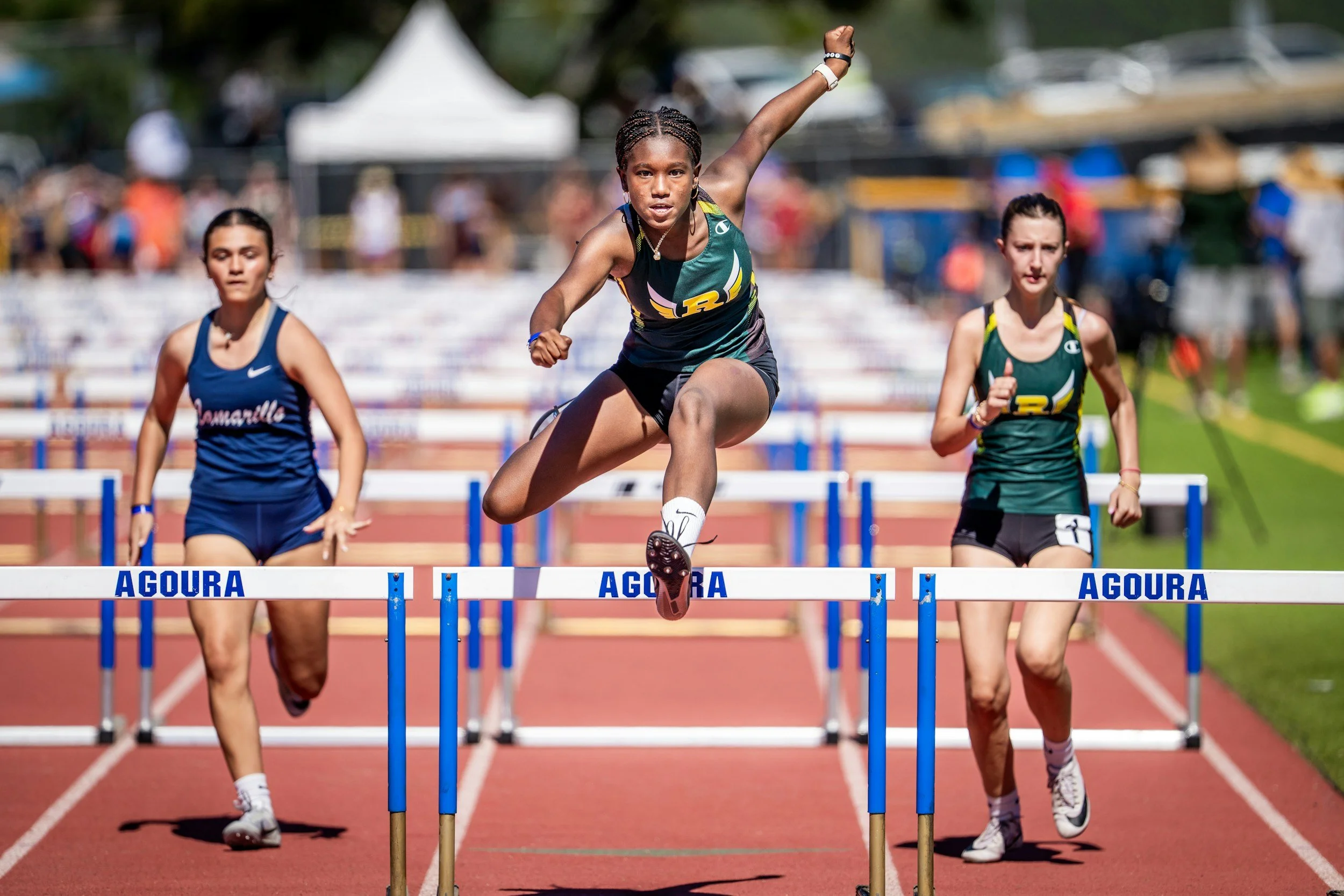
Some risk factors can't be changed — anatomy, puberty timing, and baseline hormonal differences are part of being a female athlete. But many of the most significant contributors to ACL injury risk are modifiable.
Modifiable contributors to the difference in risk between male and female athletes include bio-mechanical factors such as knee valgus, knee rotation, and neuromuscular control — all of which can be trained and improved.
This is the most important thing to understand about ACL prevention: it's not inevitable. The gap can be narrowed significantly with the right training.
A Note on Concussions in Female Athletes
While this page focuses on ACL injuries, it's worth briefly naming another area where female athletes face disproportionate risk: concussions.
Research consistently shows that female athletes experience concussions at higher rates than male athletes in comparable sports, report more symptoms, and take longer to recover. Hormonal differences and neck strength are among the contributing factors. If you're navigating a concussion as a female athlete, the same principle applies — you deserve care that accounts for your specific physiology, not generic protocols built for male athletes.