
M E N T A L P E R F O R M A N C E
Mental Performance
“Toolkit”
“The best concentration, and the greatest prospect of succeeding, occurs from total immersion in the here and now, in the present. When our minds drift into the past or future, present performance can suffer.”
— Sport Psychology Research on Mindfulness & Concentration
— T H E T O O L K I T
4 Mental Tools Worth Knowing About
These are concepts I learned through a sport psychology course and firsthand through team trainings with Dr. Patti Pfiefer. I'm not a professional — just a student athlete who found this stuff genuinely helpful and wanted to pass it along.
01 - Goal Setting
BREAKING THE BIG PICTURE INTO MANAGEABLE STEPS
One of the hardest parts of injury is staring at the finish line and feeling paralyzed. Goal setting is about bringing that finish line closer — and creating a roadmap of small wins along the way.
Outcome Goals
The big picture — returning to your sport, getting cleared. These keep you anchored to your “why.”
Performance Goals
Measurable markers — range of motion, strength milestones, completing a drill without pain.
Process Goals
The things you do every single day — showing up to PT, doing your exercises, tracking your sleep and nutrition.
WHAT THE RESEARCH SAYS
Research suggests that athletes who use structured goal setting during rehab show improvements in motivation, mood, and overall rehabilitation adherence — with studies reporting faster recovery times when goals are set consistently.
Goal Setting in Sport Injury Rehabilitation: A Systematic Review
Common Pitfalls to Watch Out For:
🛑 Setting only outcome goals with no process goals to support them.
🛑 Making goals so ambitious they erode motivation over time.
🛑 Not revisiting or adjusting goals throughout the recovery process.
🛑 Rushing milestones, which research links to re-injury.

R E F L E C T I O N
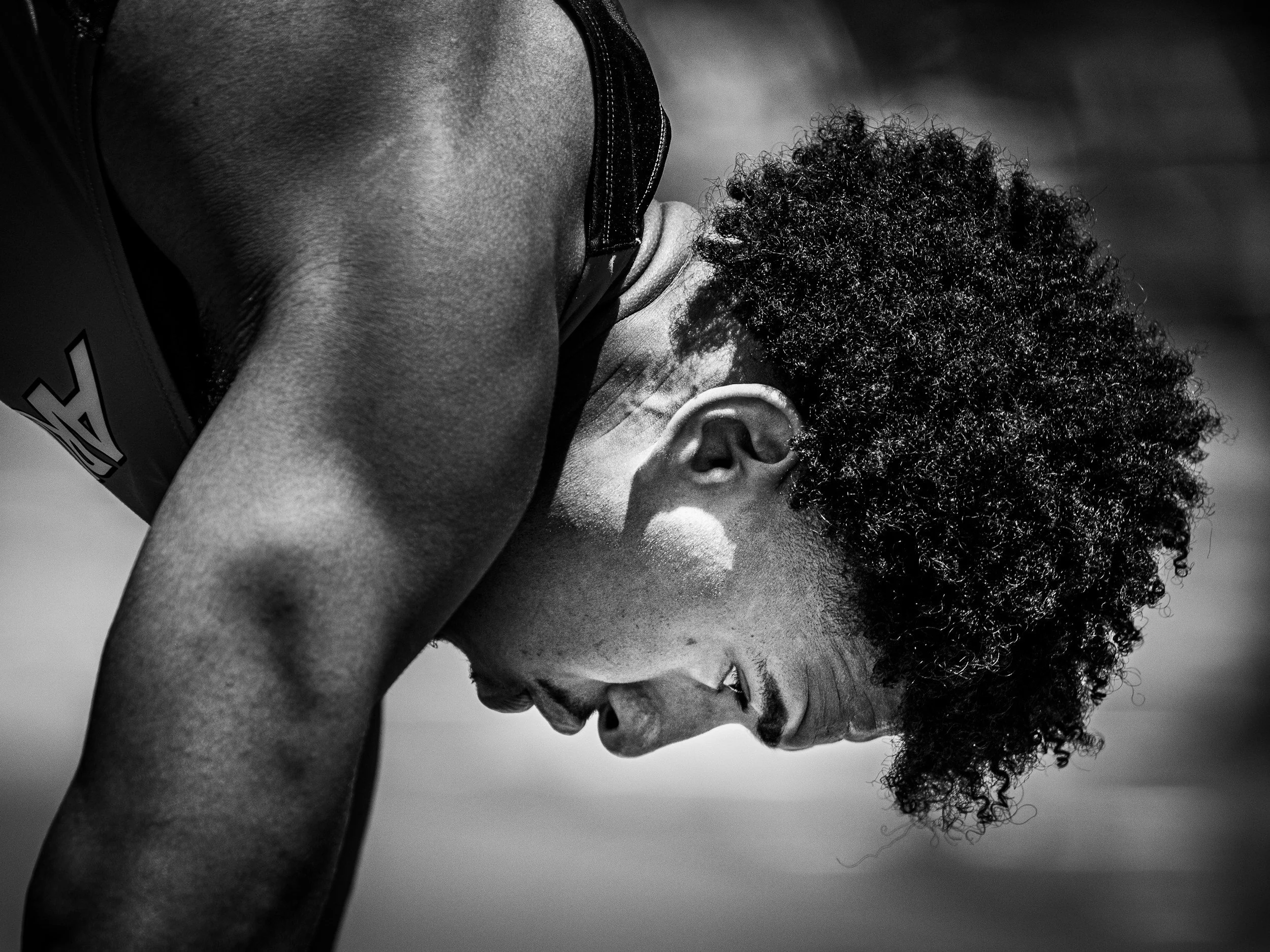
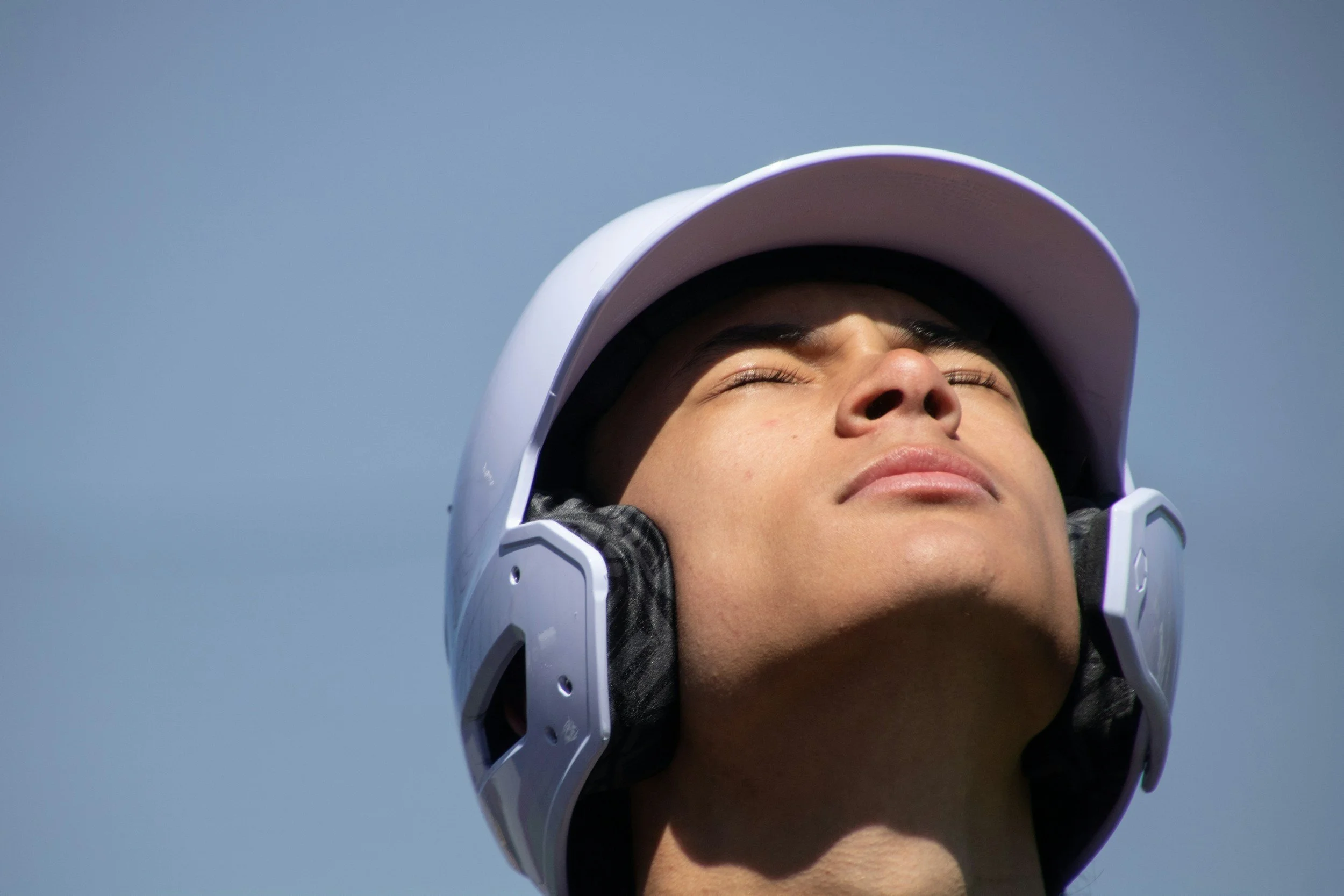
I remember during my first official season back on the mat, before I would step out to compete, flashes of my journey would flood my mind. I would close my eyes for a brief second, seeing the version of myself that was relearning how to walk and pushing through rehab, before exhaling it all out. My injuries became my source of strength — the thing that separated me from my opponents. My resilience made me unstoppable, and that was the reframing I used to turn self-doubt into reassurance and confidence.
Whenever fear or doubt crept in, I was quick to shut it out. All it took was a forceful "STOP" before my brain knew what was acceptable and what was destructive. I would journal my thoughts and perform body scans before every practice, constantly assessing and relearning the body I had to rebuild over and over again.
— G E T T I N G S T A R T E D
ways to build the habit
These are practices my sports psychology team introduced me to — simple ways to layer these tools into your existing routine.
MORNING CHECK IN JOURNAL
3-5 minutes upon waking. One thing you’re working toward today, one thing you’re grateful for, and one self-talk phrase to carry with you.
PRE-PT IMAGERY ROUTINE
Before each rehab session, spend 2–3 minutes visualizing yourself completing it successfully. Sets a focused, intentional tone.
TALK TO SOMEONE
Share your experiences with a coach, athletic trainer, or sports psych professional. Community and professional support are part of the toolkit too.
CATCH, CHECK, CHANGE
When you notice a negative thought: catch it, check if it's actually true, then change it to something more constructive. A self-talk reset.
WEEKLY GOAL REVIEW
Sundays, 10 minutes. What did you accomplish? What didn't happen — and why? Adjust next week's process goals accordingly.
BREATH WORK ANCHOR
Box breathing (4 counts in, hold 4, out 4, hold 4) is one of the most accessible mindfulness tools — use it when anxiety around recovery spikes.
— F U R T H E R R E A D I N G
RESEARCH BEHIND THE TOOLS
These are some of the sources and studies I found most helpful when learning about the mental side of recovery. All publicly accessible.
Frontiers in Psychology, 2022
Recovery, Growth & Peak Performance Following Significant Athletic Injury
Covers the full psychological side of athletic recovery — goal setting, imagery, self-talk, and the Integrated Sport Injury model
PMC Umbrella Review, 2024
Mindfulness—Based Interventions on Sports Performance & Mental Health
14-study umbrella review on attentional control, emotional regulation, concentration, and MBI use in athletes.
Systematic Review
Goal Setting in Sport Injury Rehabilitation
Confirms faster recovery, reduced psychological discomfort, and increased motivation linked to structured goal-setting in rehab.
German Journal of Sports Medicine
Imagery in Athletic Injury Rehabilitation: A Systematic Review
Covers visual, emotive, and healing imagery types with evidence on adherence, re-injury anxiety, and recovery satisfaction
BYO Scholars Archive
Sports-Injury Recovery Through Psychological Interventions
Accessible overview of self-talk, goal setting, and imagery - and how they link to healing speed and athlete mindset during recovery.
PMC - Collegiate Athletics
Expectations & Experiences with Mindful Sport Performance Enhancement
Specifically looks at collegiate athletes and their experiences with mindfulness — including what worked, what didn’t, and why.
A note on this content
I learned about these tools through a sport psychology course and team trainings with Dr. Patti Pfiefer, and experienced many of them firsthand during my own injury recovery. I'm sharing them because I think every student athlete deserves to know this stuff exists — not because I'm a professional or clinician. Please always work with your healthcare providers, athletic trainers, or a qualified sports psychology professional as part of your care team. These tools are meant to complement that support, not replace it.
02 — Self-talk awareness
CONFIDENCE BUILDING & NOTICING YOUR INNER VOICE
The voice in your head during recovery can be your biggest ally or your biggest obstacle. Learning to notice it — and gently redirect it — is a skill that takes practice. This took the most time for me to build within myself, but using the right tools made it easier.
Retrospection
Looking back at moments when you overcame adversity. Evidence you’ve done hard things before.
Thought stoppage
A cognitive technique — consciously interrupting a negative spiral before letting those thoughts take hold.
Reframing (cognitive restructuring)
Taking a negative thought and finding a more constructive, growth oriented way to frame it: “Im failing at PT” > “I’m learning what my body needs today.”
Journaling
Putting your thoughts on paper to create distance and identity patterns. This is one of the most important steps towards understanding your mental landscape during recovery.
WHAT THE RESEARCH SAYS
Athletes who used positive self-talk during recovery showed faster recovery rates in multiple studies. Those who healed in under 5 weeks used positive self-talk more consistently than those with longer recoveries.
03 — MINDFULNESS AND CONCENTRATION
LEARNING HOW TO STAY PRESENT IN YOUR RECOVERY
Mindfulness is simply the practice of paying attention to the present moment — without judgment. During injury, when your mind is often in the past (what happened) or future (will I ever play again?), this skill can help keep you grounded.
What is mindfulness?
Non-judgmental, moment-to-moment awareness. Noticing thoughts and physical sensations without getting swept up in them.
Simple starting points
Box breathing (4-4-4-4), body scans, mindful movement during PT exercises, 5-minute morning check-ins.
WHAT THE RESEARCH SAYS
A 2024 PMC umbrella review of 14 systematic reviews found that mindfulness-based interventions improved attentional control, emotional regulation, and concentration in athletes — with evidence suggesting reduced anxiety and better self-regulation under pressure.
Note: Research shows mixed results depending on the sport, athlete, and type of practice. It's worth exploring, but what works varies person to person.
04 — imagery and visualization
USING YOUR MIND TO STAY CONNECTED TO SPORT
When you can't physically be on the mat, field, court, or track — your imagination can keep you mentally there. Imagery involves engaging all your senses to mentally rehearse performance or visualize healing.
Visual Imagery
Seeing yourself executing your sport’s movements with perfect form. This keeps motor patterns active during recovery time.
Emotive Imagery
Reconnecting with the feeling of competing — the excitement, the focus, and flow state you’re working back towards.
Healing Imagery
Visualizing your body repair itself — tissue healing, strength returning, inflammation reducing. This really grounded me in the biological reality of recovery.
WHAT THE RESEARCH SAYS
A systematic review in the German Journal of Sports Medicine found that imagery improved adherence to rehab, reduced healing time, and helped athletes manage fear of re-injury. Guided imagery was also associated with improved psychological coping and reduced re-injury anxiety.
The Use of Imagery in Athletic Injury Rehabilitation. A Systematic Review
How to start: Find a quiet place, close your eyes, breathe slowly, and vividly imagine your scenario engaging in all senses - sight, sound, sensation. Visualization is most effective when all senses are applied and images are as descriptive as possible.
FOR MORE HELPFUL TOOLS…
Check out this Mental Health Toolkit, it’s filled with guided practices, skill worksheets, affirmations, playlists, self-care app resources, and many others!