Phases of Recovery
My Timeline…
A generalized framework based on my own journey recovering from three ACL injuries, designed to guide athletes through the physical progression of healing.
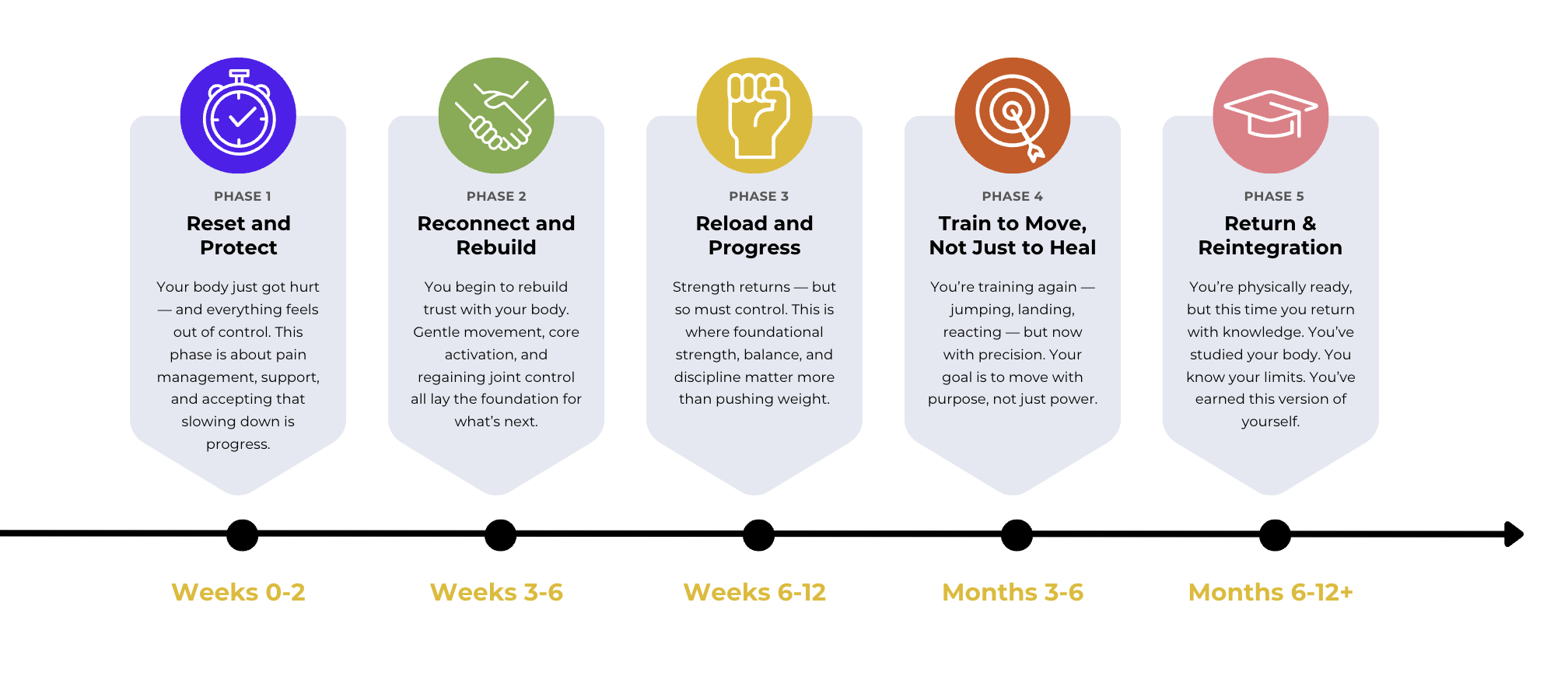
PHASE 1 — RESET AND PROTECT
“The first few days after my injury were some of the hardest. Everything moved in slow motion, and my body had shifted into protection mode. For me, this phase was all about accepting the injury and moving through the grief. I established new goals — small ones — that focused on managing daily pain and gently improving my range of motion.
My identity as an athlete felt fractured, but I began to shift my mindset away from training and competing. Instead, I focused on healing — with presence and intention.
In this phase, I had to surrender to the slowness. That was the hardest part: allowing myself not to push, not to “grind through it” like I had always been taught. I had to transition from fighter to caretaker — of my own body. And that became the beginning of a new kind of strength.” — Nyla (Founder)
WHAT I FOCUSED ON:
Rest, pain management
Inflammation control
Early movement
Stabilization
WHAT THIS PHASE IS FOR: Post-injury shock, post-op, acute injuries
WHAT THIS PHASE IS REALLY ABOUT:
Manage swelling and pain
Protect the injury site (immobilization or restricted weight-bearing)
Begin passive or gentle active motion when allowed
Mentally shift from panic to presence
Establish a support system and begin visualizing a new path forward
WHAT HELPED ME MOST:
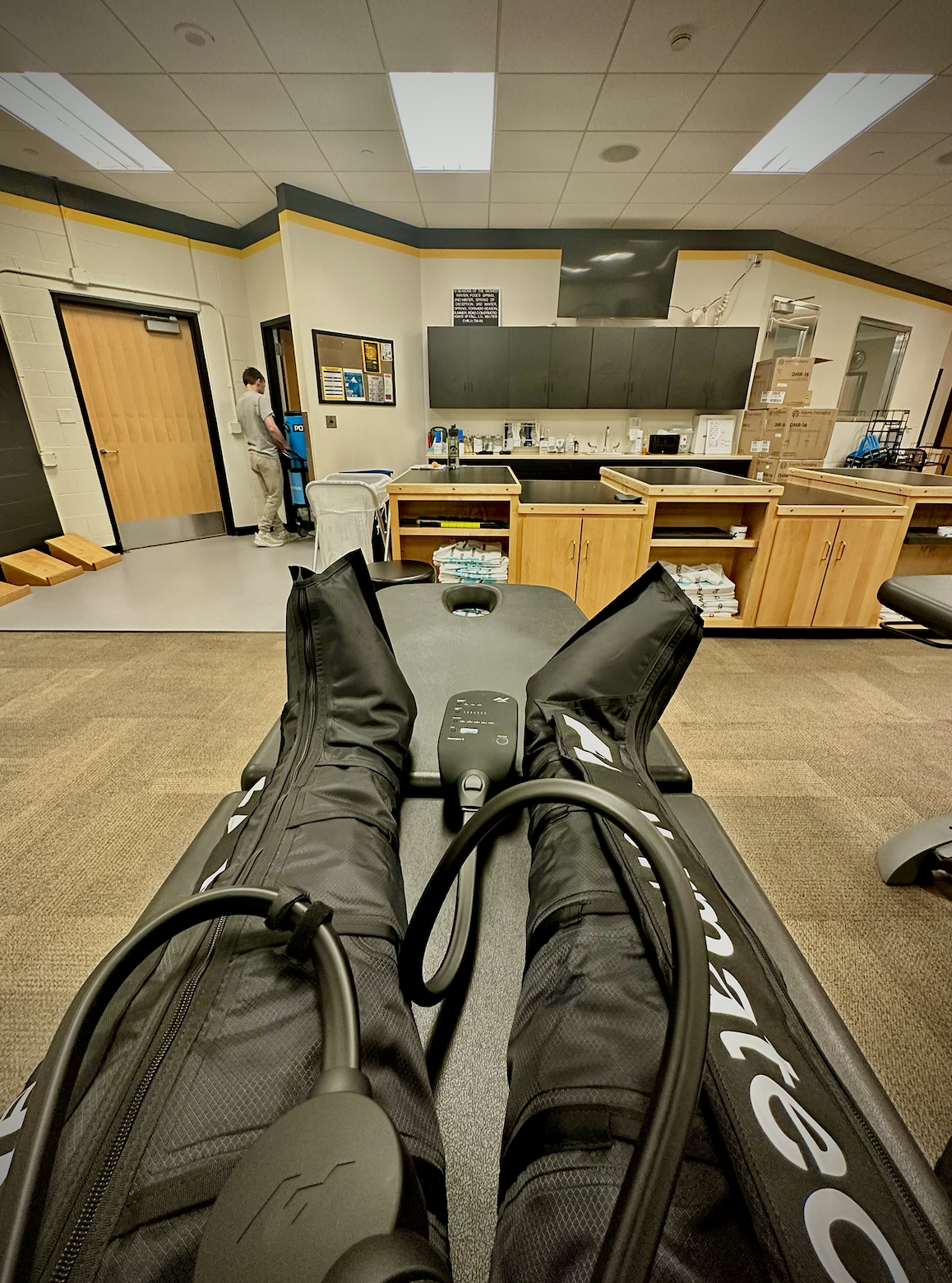
Cryo cuff machine, compression boots, and elevation to control swelling
Passive knee extensions and heel slides to preserve mobility early
Journaling to track my pain and stay in tune with my symptoms
Asking for help - letting friends and family support me in ways I normally wouldn’t allow
Letting go of urgency - learning that stillness is not the opposite of progress
Phase 2: Reconnect & Rebuild Foundations
“As the swelling subsided and the pain became manageable, I was finally able to begin moving with purpose again. I transitioned from relying on crutches to walking unassisted. I had to retrain myself to walk properly — and though my steps were slow and stiff, they were mine.
This phase was all about reestablishing control. My muscles had atrophied, and even the simplest exercises like straight leg raises and quad sets required full concentration. I spent hours each day working on core engagement, quad activation, and correcting the way I walked. My athleticism had to be stripped down to the basics — and rebuilt brick by brick.
One of the biggest challenges during this phase was learning to trust my body again. My rehab routine consisted of mini squats against the wall, slow step-ups, and balance drills on foam pads. I walked and did my lunges in front of a mirror to watch my form. I wore a thick heavy brace, but felt myself growing more independent by the day. I found confidence in mastering the fundamentals.” — Nyla (Founder)
WHAT I FOCUSED ON:
Reconnect mind-muscle pathways
Rebuild postural strength, glute activation, and core stability
Correct compensations and restore symmetrical movement
Begin functional, weight-bearing strength exercises
WHAT THIS PHASE IS FOR: Athletes beginning structured PT (once crutches are gone and pain is manageable)
WHAT THIS PHASE IS REALLY ABOUT:
walk with a normalized gait pattern
Activate and strengthen glutes, hamstrings, and quads
Improve single-leg balance and basic proprioception
Establish daily consistency with rehab routines
WHAT HELPED ME MOST:
Heel slides and wall slides to restore knee flexion
Clamshells, glute bridges, and resistance band exercises for activation
Slow step-ups and assisted lunges to regain lower body strength
BOSU holds and single leg stands to rebuild joint awareness
Blood Flow Restriction Training (BFR): Using light loads to build strength and
hypertrophy without stressing the joint.
Filmed my form to self-correct posture and symmetry
Upper body strength training to stay mentally and physically engaged
Brace-supported walking drills and eventually light bodyweight movement
Phase 3: Reload & Progress
“This phase marked a powerful turning point in my recovery. The small, careful steps of the early weeks evolved into dynamic movements. I was no longer just walking - I was training. And it felt incredible.
It wasn’t about returning to sport yet - it was about proving that I could handle resistance, load, and challenge. I started pushing sleds, stepping into heavier lifts, and increasing my single-leg strength. I began jump prep exercises: Light skips, deceleration drills, and stationary hops. The intensity returned, but with more precision and intention.
Mentally, I was learning to let go of fear and rebuild trust. Trust in the graft. Trust in the knee. It wasn’t always easy. During this phase, the soreness lingered and my muscles ached. Some days, progress plateaued and I indexed harder on recovery. But every time I completed a tough rehab session, I walked out more confident than I walked in.” — Nyla (Founder)
WHAT I FOCUSED ON:
Progressive strength loading
Build endurance and muscular capacity
Improve movement quality in all planes of motion
Prepare tissues for plyometric reintroduction
WHAT THIS PHASE IS FOR: Mid-stage rehab (across all injuries)
WHAT THIS PHASE IS REALLY ABOUT:
Load muscle group safely and symmetrically
Increase weight tolerance through controlled lifting
Increase endurance and movement complexity
Begin closed-chain, multi-joint movements
WHAT HELPED ME MOST:
Heavy resistance training: trap bar deadlifts, leg press, nordic hamstring curls
Squat mechanics and single-leg RDLs to correct asymmetries and improve control
Plyometric prep: Pogo hops, lateral bounds, soft landing mechanics
Introduce running mechanics using anti-gravity treadmill before full impact
Conditioning: bike circuits, sled pushes, and core circuits
Consistency in sleep, recovery, and fueling to support physical stress.
Phase 4: Return to Dynamic Function
“By this stage, the athlete inside me was finally waking up. I was moving faster, reacting quicker, and — most importantly — feeling free again. This was the phase where rehab began to look and feel like sport. Footwork drills returned, motion became more dynamic, and I could visualize matches in my head while running through wrestling movements. But with that excitement came the biggest mental challenge of all: learning to trust my knee in unpredictable scenarios while making sure I didn’t overdo it.
The first time I cut laterally at full speed, my heart raced faster than my legs. Every movement was a step forward in rebuilding my identity as a competitor. I learned to listen to my body, to stop fearing soreness or fatigue, and to remain emotionally steady in the face of self-doubt.
This was the “make or break” zone — the place where rehab meets performance, and where everything you’ve built starts to come together.” — Nyla (Founder)
WHAT I FOCUSED ON:
Sport-specific movement patterns
Neuromuscular control under pressure
Agility, acceleration, deceleration (plyometrics)
Reactive and cognitive drills for confidence and timing
WHAT THIS PHASE IS FOR: Late-stage rehab, high performance athletes preparing for sport re-entry
WHAT THIS PHASE IS REALLY ABOUT:
Safely restore explosive movement: sprinting, cutting, and pivoting
Rebuild reactive confidence in movement
Improve deceleration control and direction changes
Mimic sport-specific scenarios
Continue strength gains with added movement complexity
WHAT HELPED ME MOST:
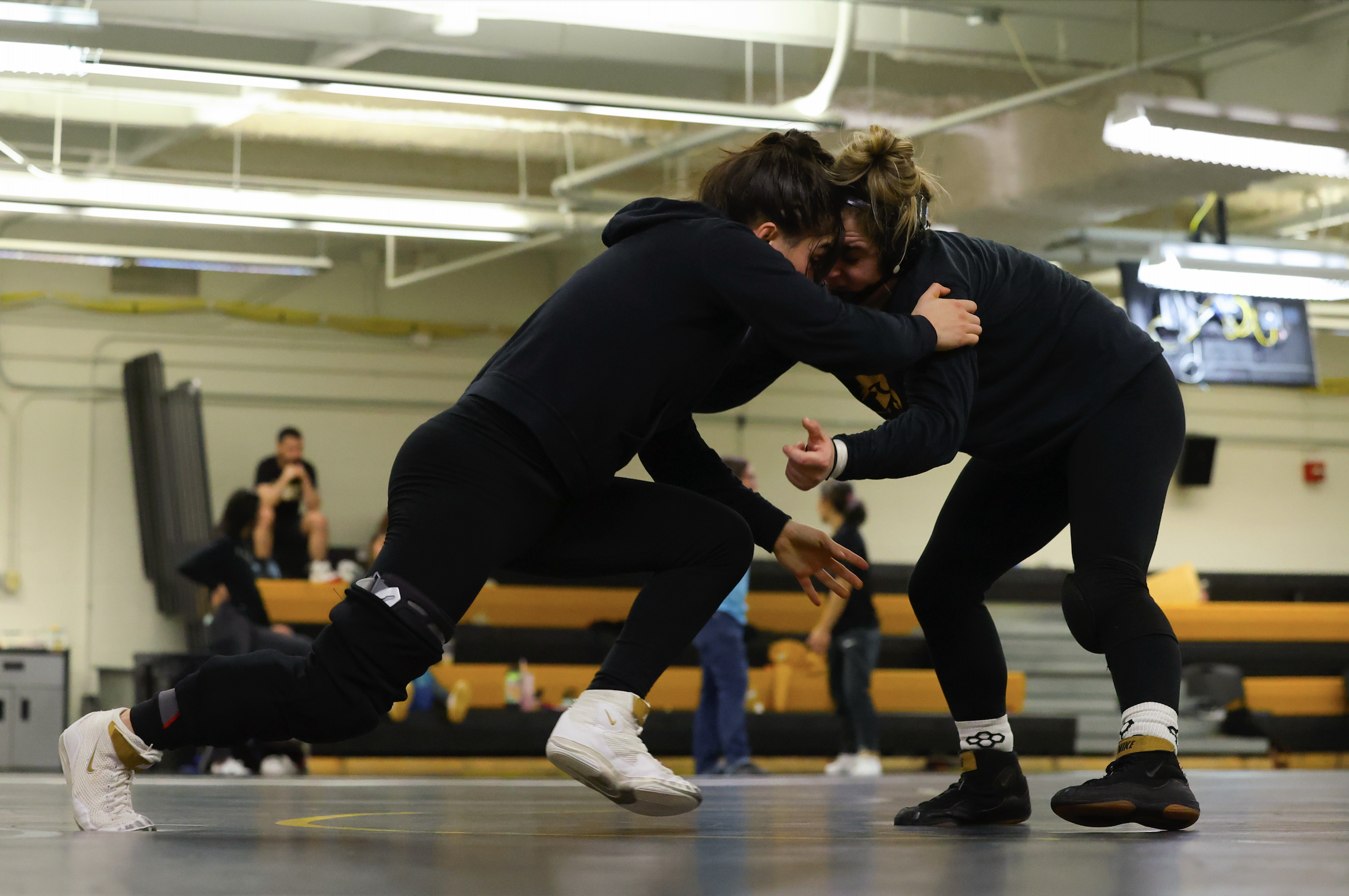
Non-contact wrestling drills + Controlled wrestling situations: Stance and motion, hand fighting, and non-resisted sequences
Agility ladder drills for fast feet (including one-legged hops)
Reactive change of direction
Deceleration training: drop landings, reverse lunges, cutting drills, lateral decels.
Return to running progression: Transitioned from treadmill to open field with intervals and terrain variety
Self-checks before sessions: How sore do I feel? Was I compensating? Can I land evenly?
Phase 5: Return & Reintegration
“This was the final stage of my rehab — the moment everything clicked. My knee felt 110%. Practices, matches, warm-ups — even the nerves about competing — no longer felt like distant memories. But returning to competition was about more than just feeling ready. It required flipping a switch — blending everything I had rebuilt: physical readiness, technical sharpness, mental calm, and emotional maturity.
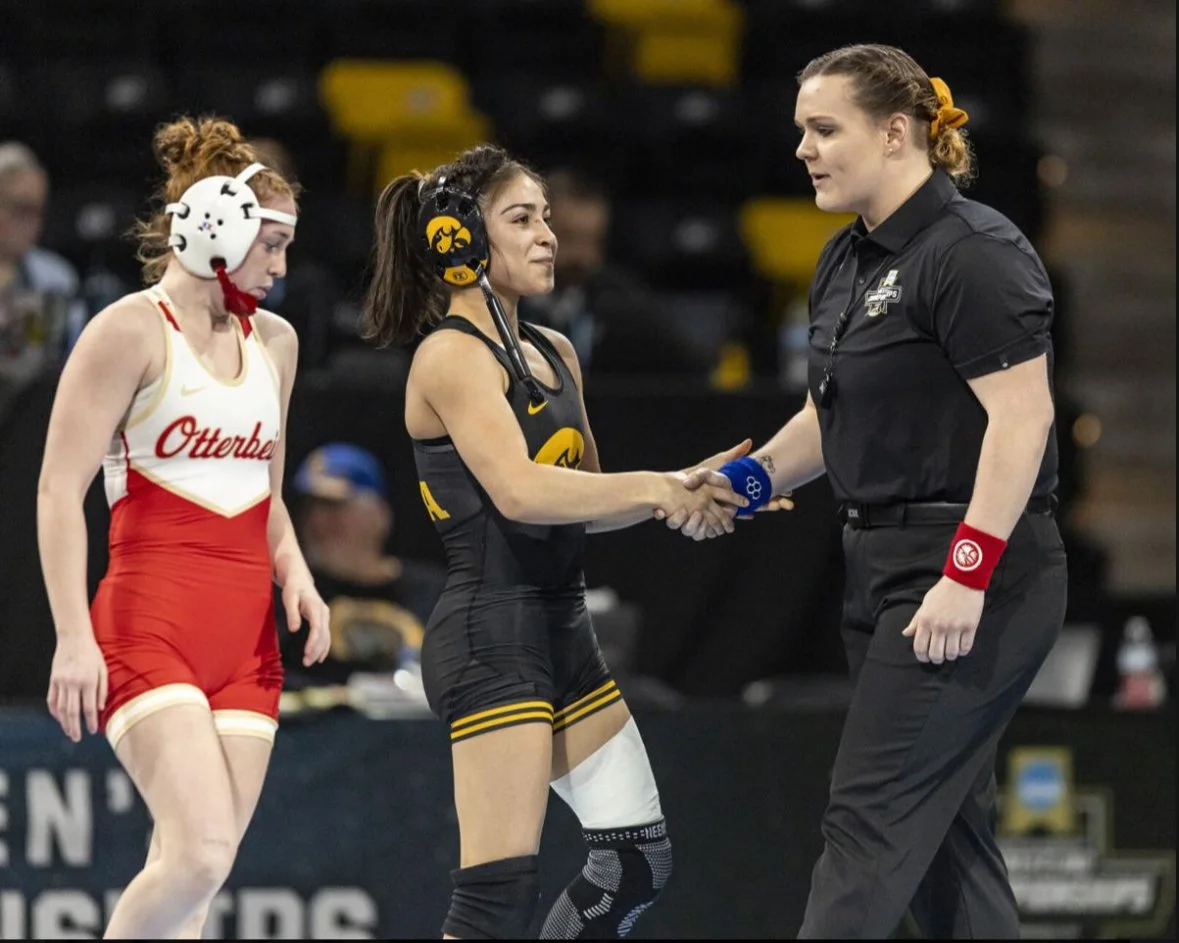
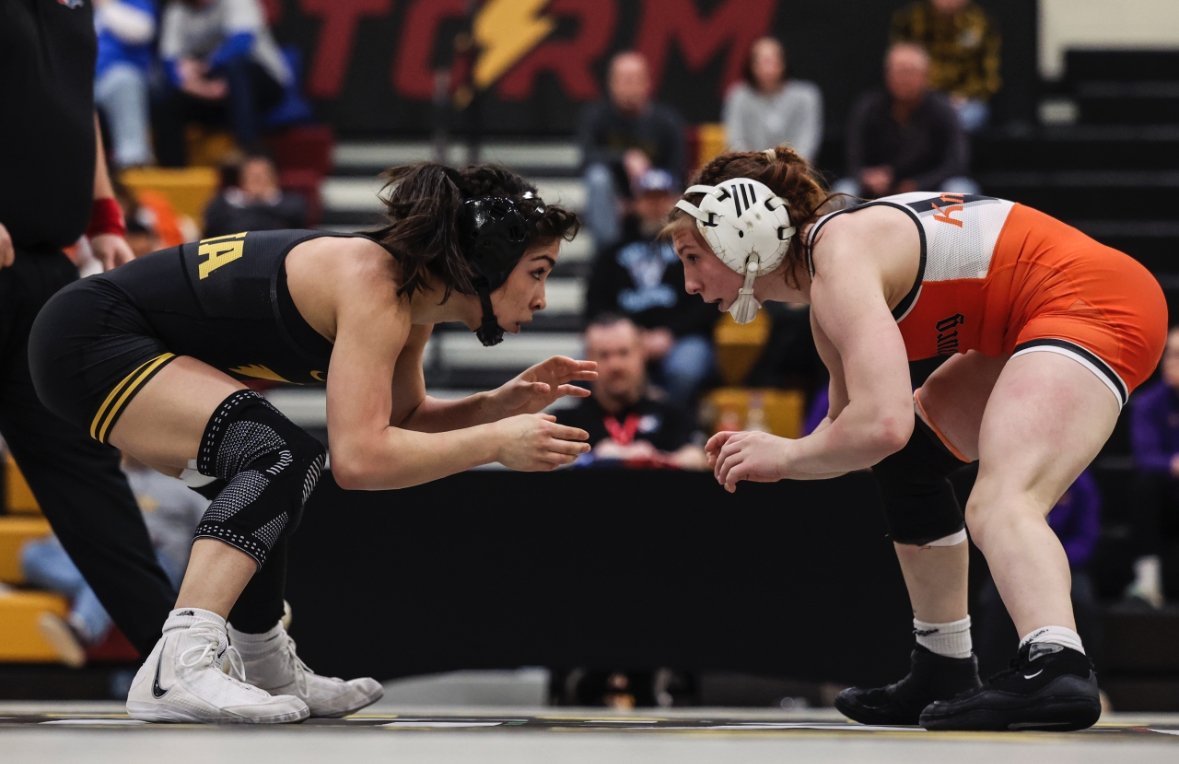
The first time I stepped back onto the mat, I felt an overwhelming sense of gratitude. I had reached the place I dreamed about for months — the point where I could return to doing what I loved. Every movement was rooted in discipline and patience, grounded in the habit of listening to my body. With every shot, block, and turn I performed, I carried not just the scars of two surgeries — but the strength of two recoveries.
I’d be lying if I said I returned as the perfect athlete. Time away from the mat left some rust in my wrestling. But I was proud of one thing above all: my ability to ground myself before every match and compete with heart.
From this point forward, the focus became clear — to keep learning, keep growing, and remain disciplined in the face of every challenge ahead.” — Nyla (Founder)
WHAT I FOCUSED ON:
Confidence in competition scenarios
Full-speed, sport-specific movement under pressure
Technical refinement and decision-making
Managing load and recovery across tournaments
Continuing maintenance rehab and recovery to support load
WHAT THIS PHASE IS FOR: Athletes cleared for sport but still regaining rhythm (transitioning from rehab into full team training and matches)
WHAT THIS PHASE IS REALLY ABOUT:
Compete without compensation or hesitation
Maintain strength, control, and balance in chaotic sport environments
Regain rhythm, timing, and match-day confidence
Monitor for re-injury risk and adapt training loads accordingly
WHAT HELPED ME MOST:
Return-to-sparring protocol: Starting with controlled flow, moving into live go’s, then full matches
Load management: Strategic rest, de-load weeks, and pre/post-match recovery protocols
Technical sharpening: Reviewing film, working with coaches to fine-tune details I had lost during time off
Mental prep: visualization, breath work before matches, and journaling post-competition.
Gradual reintegration into team training: scaling up volume over weeks, not days
Rehab and maintenance: daily mobility, band work, glute activation, and asymmetry monitoring
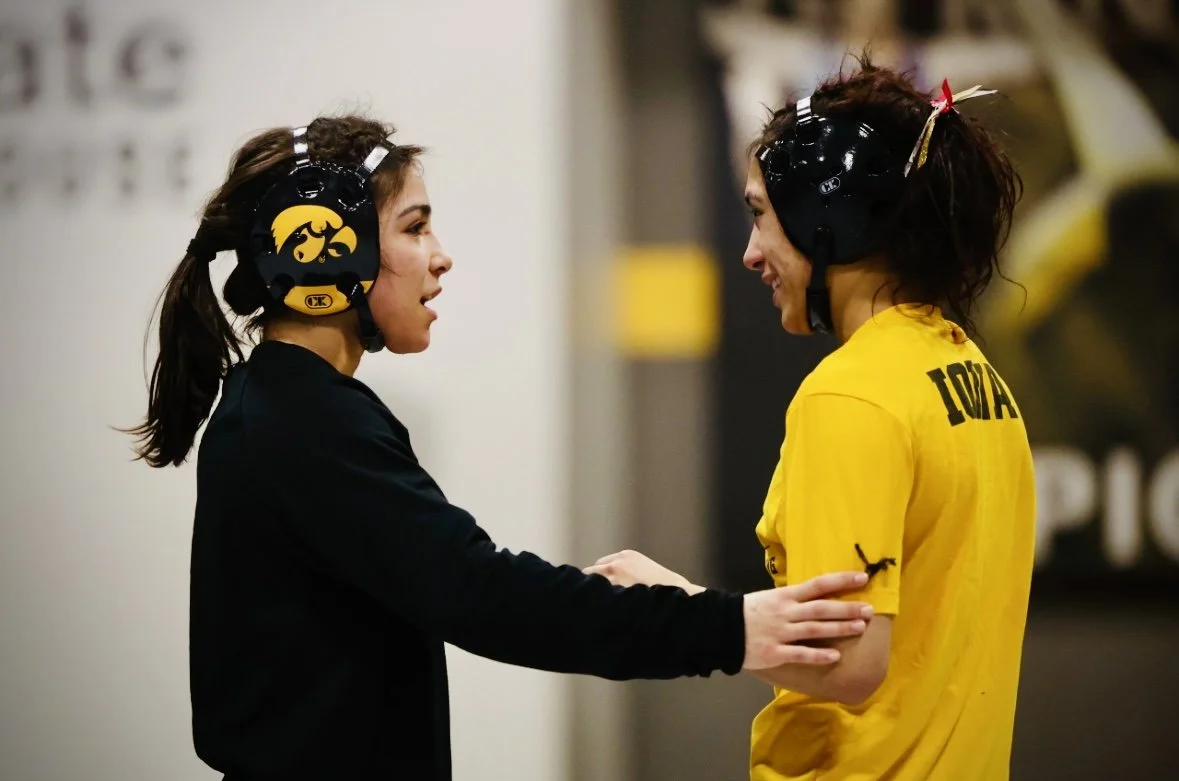
Ongoing communication with Lauren and other PTs to adjust training based on soreness or compensation
About These Phases
These reflect the general arc of my own recovery process, from early protection to full reintegration. While I developed this structure through my ACL journey, the core goals and challenges in each phase are relevant to many sports injuries. My hope is that this can serve as a guide for athletes navigating the uncertainty of rehab — with flexibility, empathy, and intention.
Disclaimer: These phases are based on my personal experience under the guidance of licensed professionals. They are not intended to replace medical advice. Always consult with a qualified provider before beginning rehab.
Recovery Snapshots
COMPRESSION BOOTS FOR RECOVERY & CIRCULATION
Compression boots use dynamic air pressure to enhance circulation, reduce swelling, and promote muscle recovery. Ideal after intense sessions or post-surgery rehab, they support lymphatic drainage and accelerate healing.
CRYOTHERAPY FOR INFLAMMATION & PAIN RELIEF
Cryotherapy machines deliver cold therapy to reduce inflammation, numb pain, and minimize swelling in post-operative or high-intensity recovery phases. Effective in calming irritated tissue and aiding early-stage rehab, it's a go-to for cooling down with purpose.
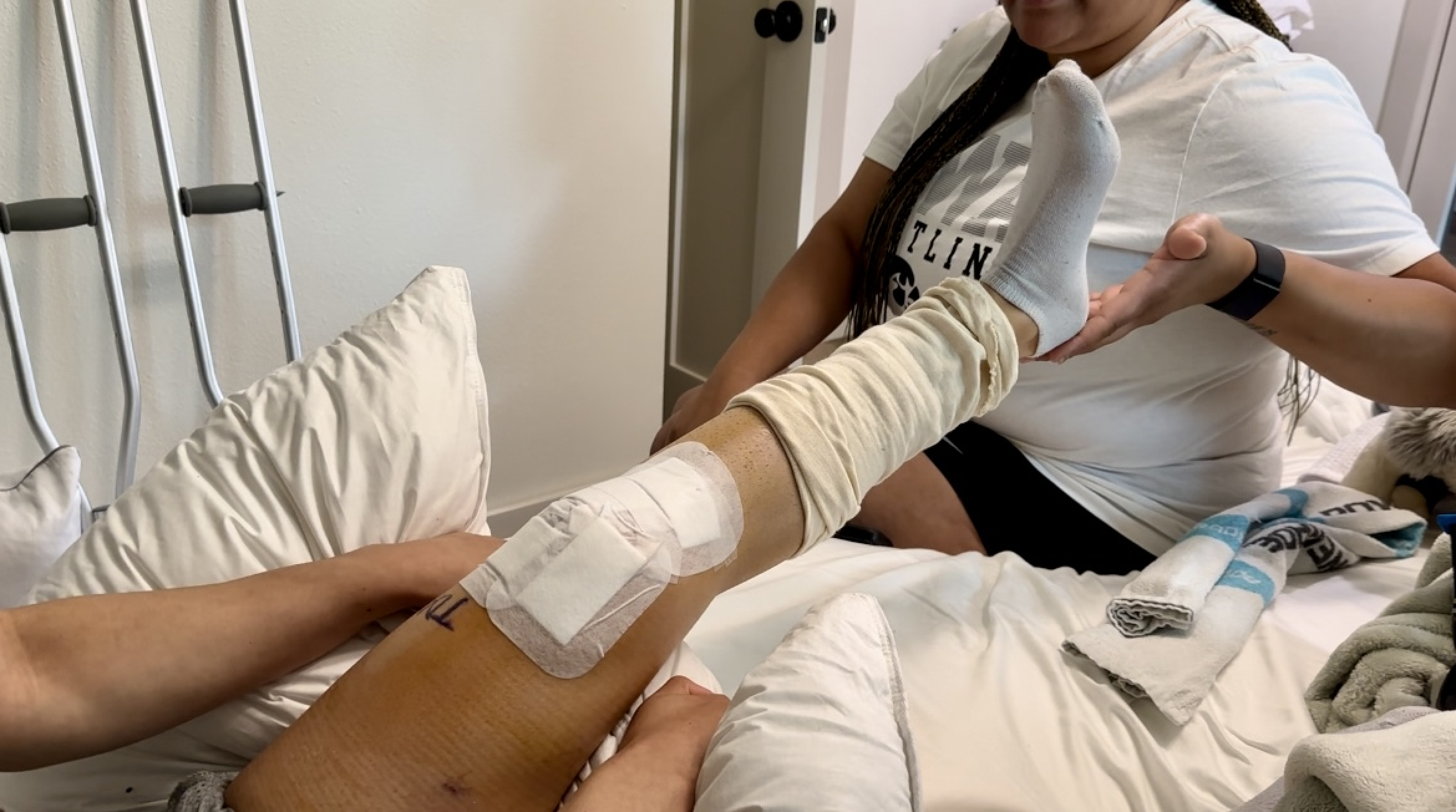
EARLY STRAIGHT LEG RAISES FOR QUAD ACTIVATION
Assisted straight leg raises are one of the first exercises introduced after ACL surgery. Even a few days post-op, they help wake up the quadriceps, reduce muscle atrophy, and set the foundation for restoring full leg control.
E-STEM SUPPORT
Activating the quad post-ACL surgery is one of the biggest early hurdles in recovery. Straight leg raises with neuromuscular electrical stimulation (NMES) help retrain muscle firing patterns while protecting the graft.
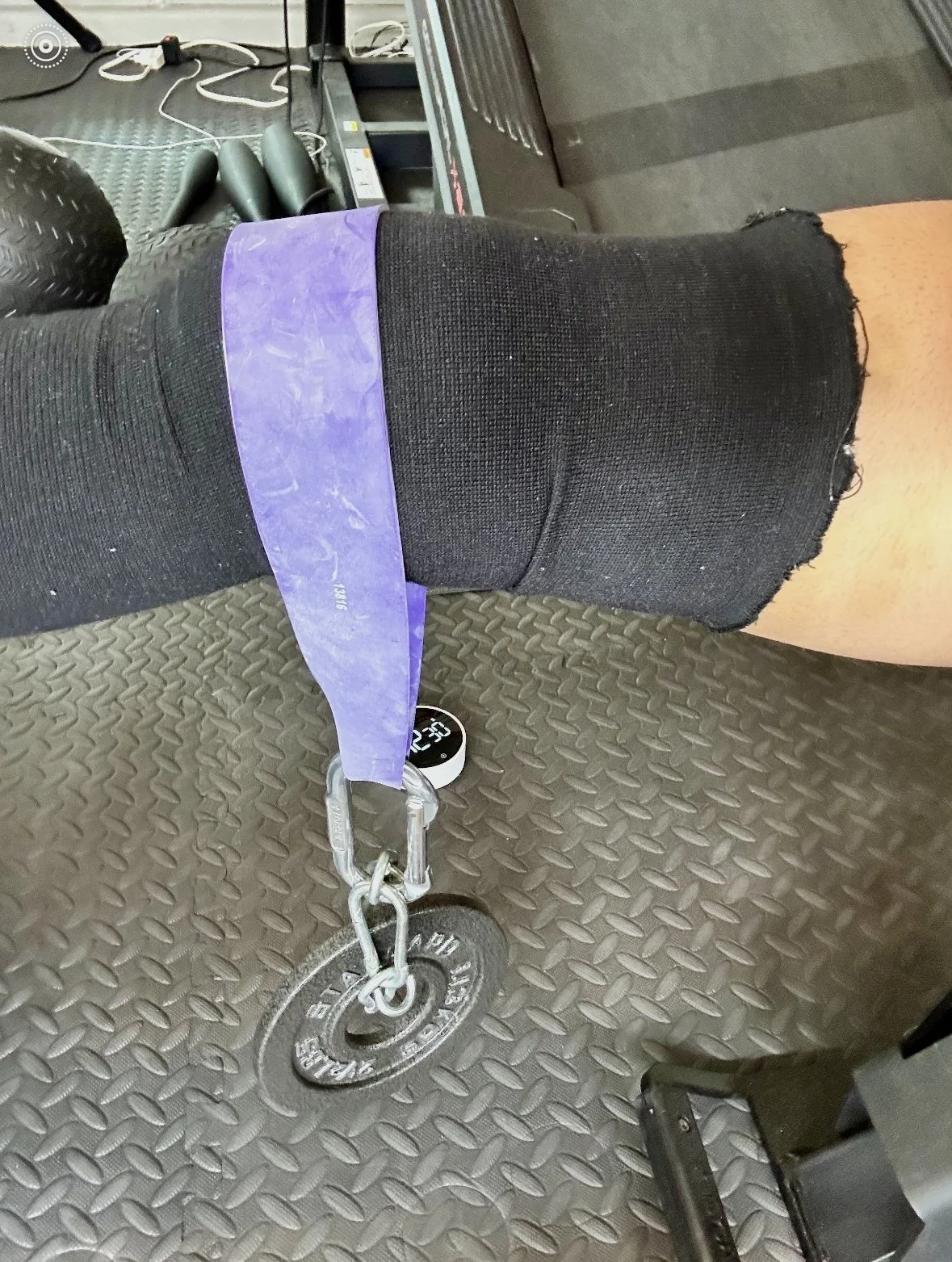
WEIGHTED KNEE EXTENSION MOBILITY WORK
Using light weights during knee extensions encourages joint mobility, promotes soft tissue adaptation, and gently challenges the knee's end-range extension. This movement helps reduce stiffness and supports progress toward symmetrical leg function during early rehab.
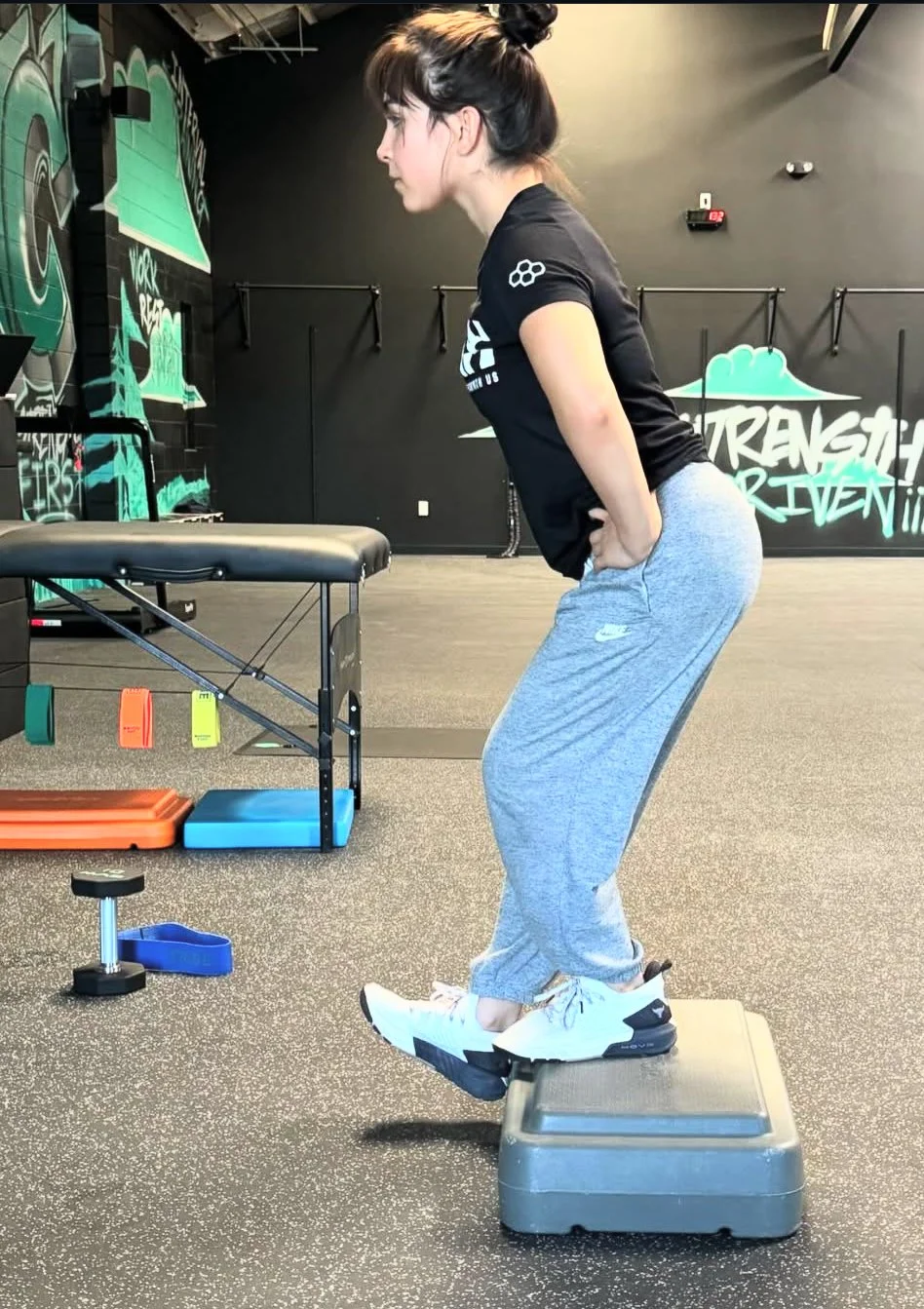
STEP-DOWNS FOR CONTROL & STABILITY
Step-downs are a key progression for regaining eccentric strength and dynamic stability post-ACL surgery. This movement targets quad control, hip alignment, and knee tracking—all essential for safe return to sport.
BOX JUMPS FOR EXPLOSIVE POWER & CONTROL
Box jumps build lower-body explosiveness, coordination, and landing mechanics. They're a key progression in return-to-sport training, helping athletes safely reintroduce plyometric demands while reinforcing proper form and soft landings ability
LATERAL GLUTE WALKS FOR HIP STABILITY
Banded glute walks target the gluteus medius and improve lateral hip strength and stability. Strengthening these muscles is key to maintaining proper knee alignment and preventing compensatory patterns during recovery and athletic movement.
GETTING BACK ON THE MAT
Getting back on the mat marks a major milestone in recovery. This phase is about reconnecting with your sport, rebuilding timing and trust in your body, and rediscovering joy in the movements that once felt second nature. For many athletes, this moment brings as much anxiety as it does excitement — and that's completely normal. The goal isn't to pick up where you left off, but to meet yourself where you are now and build from there with intention.