Year 3 —Third ACL Tear
The third time was different.
The first two times, I knew. I felt the pop, hit the ground, and understood immediately what had happened. But the third time came quietly — hidden inside a season I had fought too hard to reach, disguised as discomfort I had learned to push through. I didn't know how damaged my knee already was. I just kept going.
After two ACL recoveries, I returned to the mat with a different kind of intention. I held off on post-season competitions, managed my load carefully, and listened to every signal my body sent. There was always a cautious whisper from my knee — I had learned to hear it. But I refused to let it become the loudest voice in the room.
That summer, I was relentless. I trained with the Stanford men's team while I was home. I had one-on-one sessions with my brother — a skilled wrestler in his own right — drilling technique until the movements lived in my muscle memory. When I returned to Iowa, I trained with anyone who was there. When I visited my boyfriend, I turned his living room into a gym, running non-contact drills and bodyweight exercises in whatever space I could find. I was driven beyond restraint. No barrier could hold me back.
I wanted to enter that first season at an unrecognizable intensity. Not just physically — mentally.
A Baker's cyst appeared during those early months back. The first echo of uncertainty. But the research reassured me it would likely resolve on its own, and I filed it away as a post-surgical complication. If there was one thing I had learned from the first two recoveries, it was this: nothing gets dismissed. Every ache gets taken seriously. Every signal gets heard.
What stunned me most about returning to the mat was how nothing felt wrong. It was as though I hadn't missed a beat — my speed and timing sharper than ever, my strength improved, my mind clearer than it had ever been. All those months of film study, mental reps, and quiet preparation had paid off in the most obvious ways. With every shot, every finish, every throw, I had never felt more alive.
But I had learned to treat even that feeling with caution.
I sat down with my coaches before the season began and we built a plan — a strategic loading program for that first semester. Our season opened with a series of wrestle-offs. It was the first NCAA season, and only ten wrestlers would earn the right to represent the university at the championship tournament. All thirty of us were hungry. But I knew I wanted it more.
I was battling for my name on our All-American wall. I was battling for the girl who had been forced into the shadows, sidelined and uncertain, twice. Before every match, I felt a pinch of fear — that familiar whisper. But over time, I learned something important: fear doesn't have to be the enemy. I learned to embrace it, reshape it, turn it into fire.
Then came my home debut.
After nearly four years of anticipation, I stormed through the Carver flames. The crowd roared. "I'M A CHAMPION" blasted through the speakers as my walk-out song. I jumped, patted my arms and legs, and smiled so wide it hurt. I let that moment move in slow motion. I looked around at the same crowd I had seen so many times before — only this time, they were cheering for me.
I carried that energy through the first half of the season.
Then December arrived. Team Ukraine visited our university, and Terry Steiner — the USA Women's National Team coach — ran a camp in preparation for a special dual Iowa City would host. During the final days of camp, I was battling a Ukrainian wrestler when I felt it. In the middle of my exhaustion, in the middle of live combat, a sharp pop.
Within seconds, I was on my knees.
I screamed — not from pain, but from recognition. From the nostalgia of a sound I knew too well and never wanted to hear again. Minutes passed. Miraculously, I was walking. I could bike. Lauren assessed me with a steady, unreadable expression, and noted that my knee felt a little lax. My surgeon later confirmed it — a possible ACL sprain. A stretch, not a tear. I remember the nightmares in the days that followed. The sleepless nights. The fear of what the answer might be.
I never got scans. Looking back, I'm still not sure whether that was the right call. It might have confirmed what my body was already telling me — but it also might have taken the season away from me before I had the chance to fight for it.
From that point on, I wrestled every practice and every tournament with my knee taped so heavily it felt like a brace. Through every physical reminder that something wasn't right, I told myself the same thing: I am resilient. I can do this.
If I couldn't bend my knee, twist it pain-free, or wrestle without sharp pain — I would have stopped. But somehow, my body kept pulling me through.
Then came the call.
I had won the spot. I was going to Regionals. I became the first Region 5 NCAA champion, winning every match by pin or technical superiority. I shed tears after that. With everything I had been through, every win felt enormous. I let myself feel the weight of it — soaking in each moment of that season, knowing the job wasn't done but allowing myself to celebrate anyway.
Nationals came two weeks later.
I entered seeded fifth. I knew what the road ahead looked like — the fourth seed in the quarterfinals, the first seed in the semifinals. Two opponents I had already lost to. A tough draw. But I had stopped believing that the road ahead determined the outcome.
Friday, 10 a.m. Whistles blew.
I was the first one on our team to step out. I forgot about my knee. I forgot about the aches, the tape, the fear. I stepped onto that mat with everything I had — nerves and adrenaline running through me, but courage and confidence louder than all of it. Then, the quarterfinals came. I secured a 4-4 win. The stadium roared. I had redeemed my loss, I officially secured my status as an All American, and in that moment, I felt electric.
The semifinals came the next morning.
I was wrestling the pound-for-pound best female wrestler in the country — Audrey Jimenez. Incredibly decorated. Dangerous in every position. After a hard battle, she caught me — and I felt another pop.
The same pop.
Pain radiated down my leg. No scream this time. No tears. The adrenaline carried me through the handshake, the embrace. She was one of the few wrestlers I genuinely respected and admired. I limped off the mat — but my fire kept me in the tournament for one more match. I wanted third desperately. I made it to the third-place match before my knee told me it was over.
Fear took over everything. I couldn't go through it again. I just couldn't.
I finished the tournament as a 4th place NCAA All-American. And despite everything — despite the tape, the pop, the fear, the limp — I was overcome with emotion. During the parade, gratitude was the only feeling in my heart.
I got scans a few days later.
I was sitting in a coffee shop, studying for finals, when Lauren called. The tone of her voice told me everything before she said a word. I stepped outside.
"Your LCL is completely torn and your ACL is also torn. I'm so sorry, Nyla."
There is a certain silence that comes with that kind of news. The silence of landing in the same place you fought so hard to leave.
I had done everything right. I changed my sleep routine, my eating habits, my study schedule. I recovered with diligence and intention. I listened to my body. I managed my load. I did everything I was supposed to do — and I was back here anyway.
I returned to my car and sobbed for hours.
When I finally called my family, they cried with me. I felt utterly hopeless. Shattered. Because I knew exactly what this meant — I knew the road ahead better than anyone.
The full picture was devastating. Severe scar tissue that had been limiting my knee extension for months, even heading into nationals — a cyclops lesion. A Baker's cyst. A completely torn LCL. A strained MCL. A completely torn ACL. A meniscus torn in two places, likely on two separate occasions — injuries I had been competing through without ever knowing, all on the same knee.
After a long conversation with my brother, I made the hardest decision of my life.
I retired.
I walked away from wrestling — the sport that had defined seventeen years of my life — not on my own terms, not at the finish line I had imagined, but in the middle of the worst pain I had ever known. I let go of my dream of becoming a World and Olympic champion. And I began to redirect everything I had left toward medicine, toward orthopedics, toward the athletes who would one day sit in the same silence I sat in that day outside the coffee shop.
That decision broke something in me.
But it also built something new.
In the weeks that followed, my brother went on his own quest. He entered the NCAA Championship as the 10th seed — the underdog, the long shot. Match by match, he kept winning. And in overtime, in a moment that still doesn't feel real, he stole the championship.
After the final whistle, after the embrace with his team, he turned to the wrestling world and said the words I will carry with me for the rest of my life:
"I did this for her."
From siblings, to training partners, to achieving dreams together — even the ones that had to change shape to survive.
This is why RebuildYou exists.
Not because I had all the answers — but because I know what it feels like to have none of them. I know what it's like to sit in a car and sob, to hang up the phone and feel your world collapse, to face a recovery you never asked for with nothing but your own will to get through it.
I'm moving forward now — toward medicine, toward orthopedics, toward a career built around the athletes who know this pain too well. I want to be the doctor who sits across from the athlete who just got the call, who looks them in the eye and says: I know. And I can help.
RebuildYou is the beginning of that promise.
This platform exists so that no athlete has to navigate injury alone — without information, without community, without someone who has been exactly where they are.
You found this place for a reason.
Let's rebuild together.
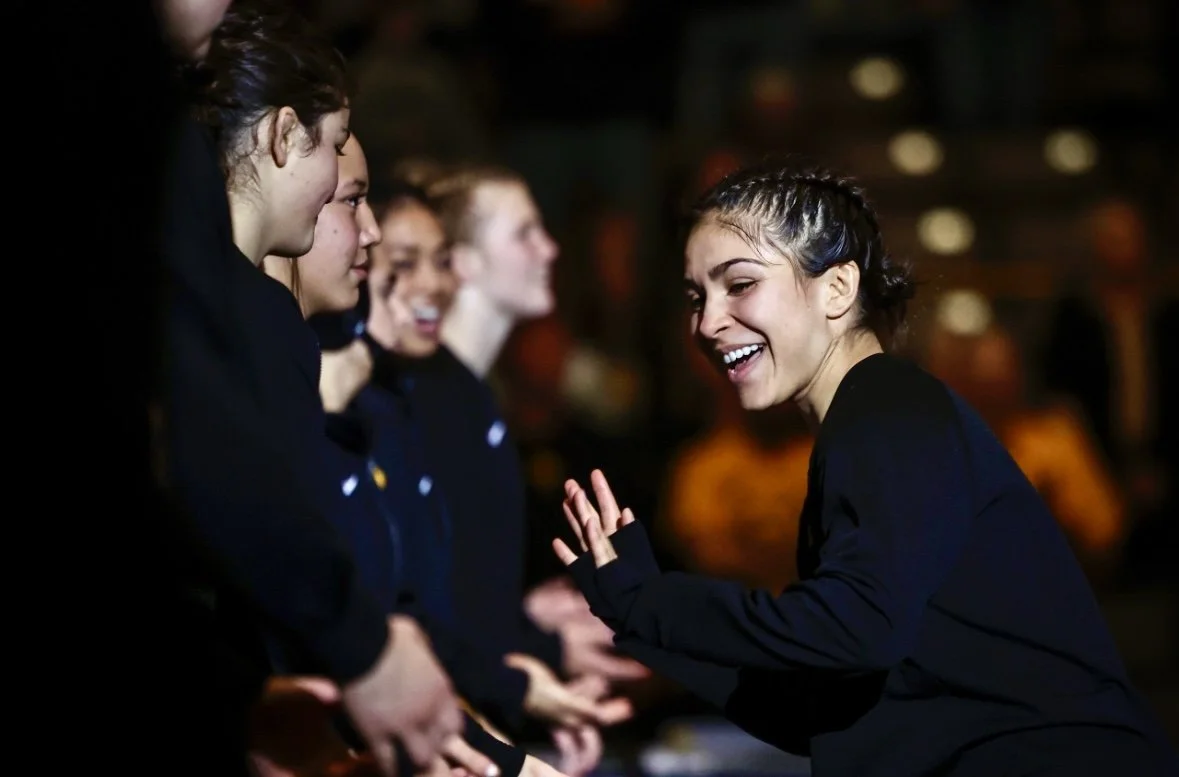
MY HOME DEBUT — Slapping hands with the team that carried me through every single day of it.
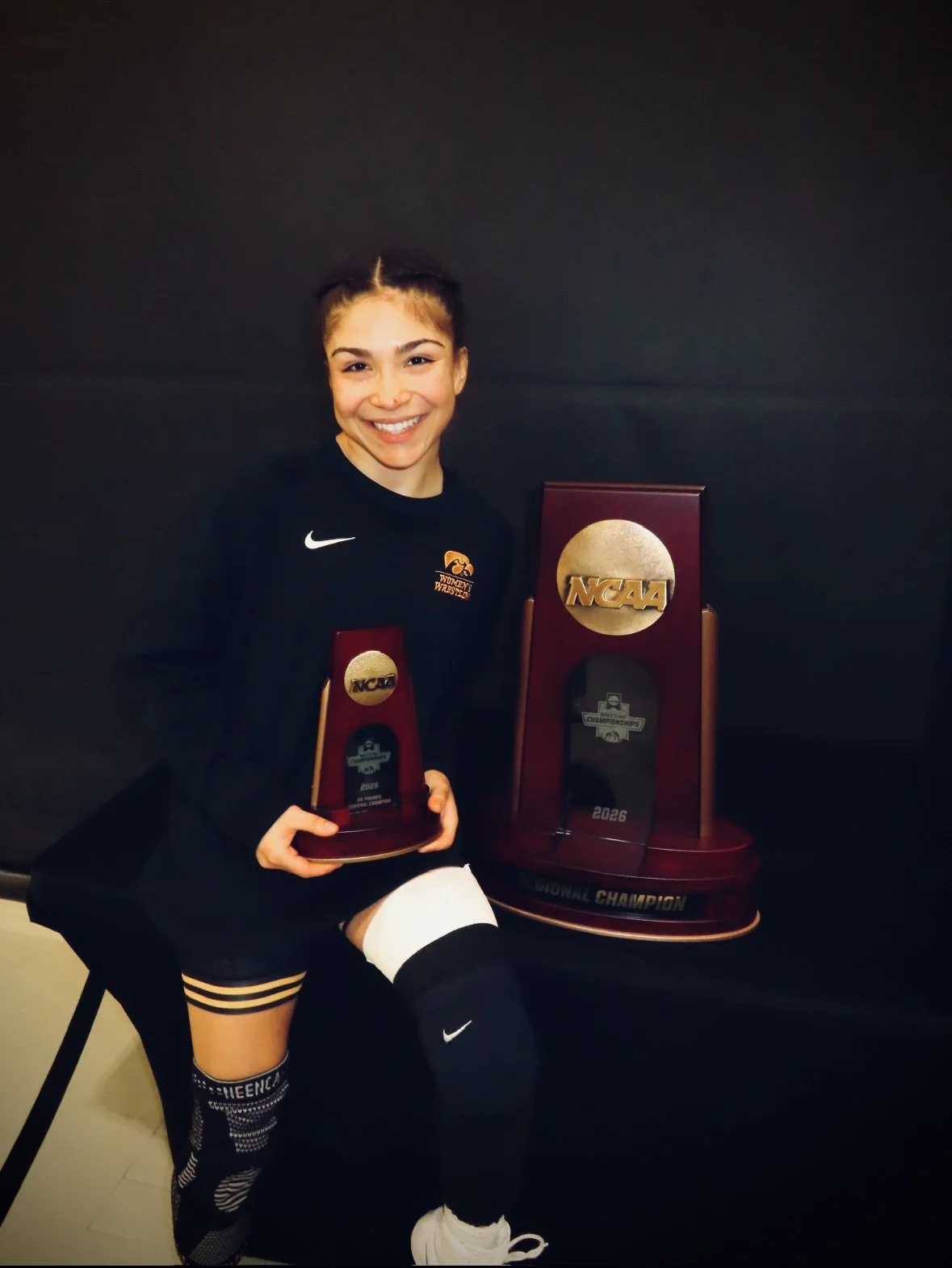
REGION 5 CHAMPION — Earned with a torn knee and a full heart.
INTERVIEW AFTER MY FIRST MATCH — A look into my mindset at the first NCAA Championship.
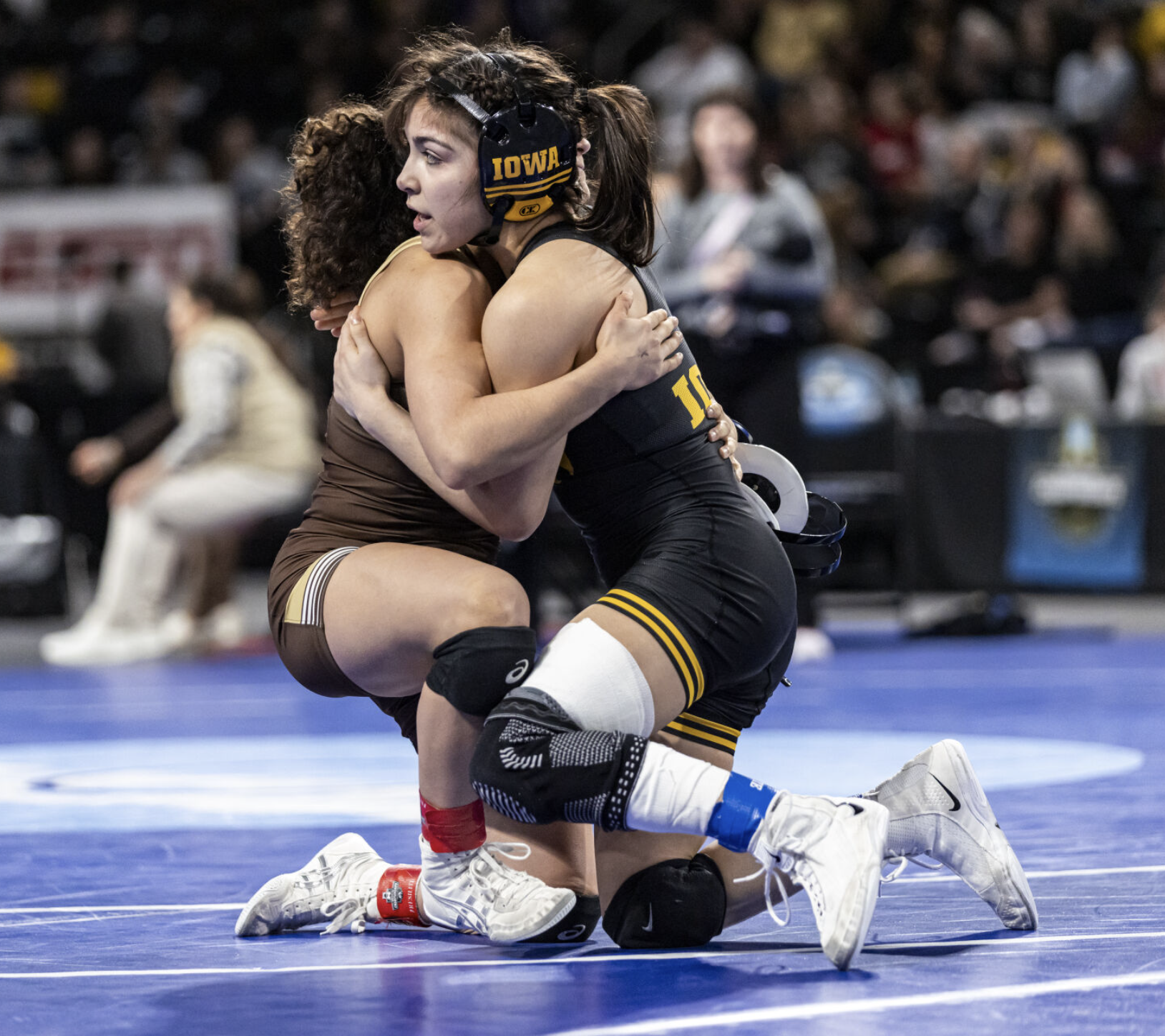
After one of the hardest battles of my career, Audrey and I shared this moment. What neither of us knew yet — my knee had just torn for the third time. The adrenaline hadn't let me feel it yet.
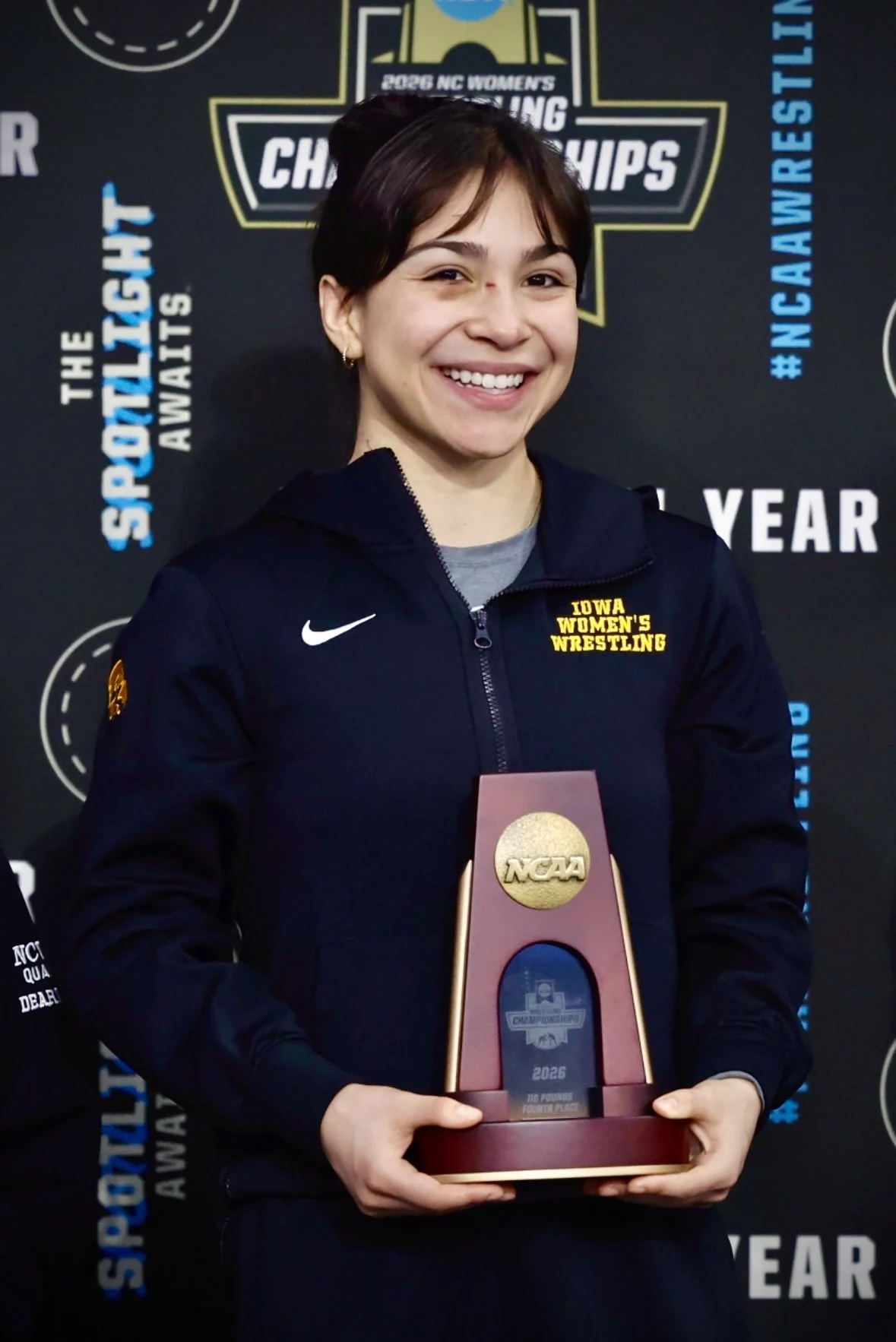
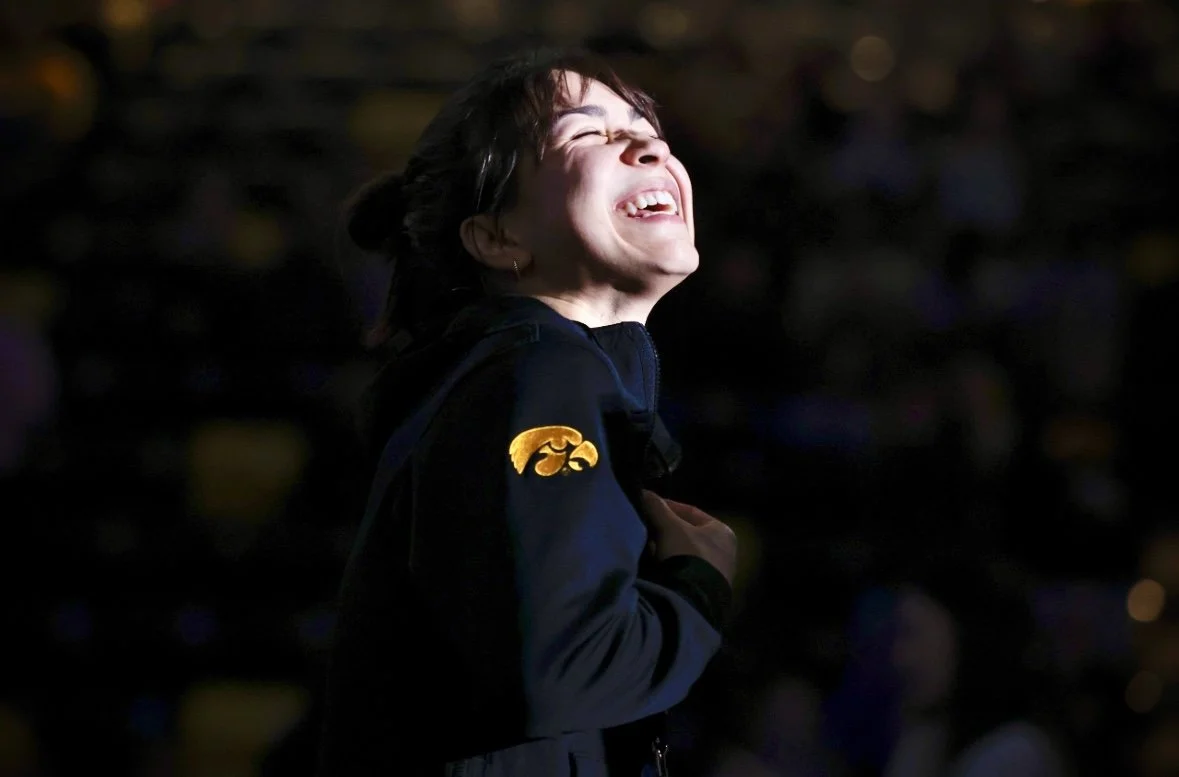
4TH PLACE — NCAA All-American. Last match of my career. I didn't know it yet — but I had already won.
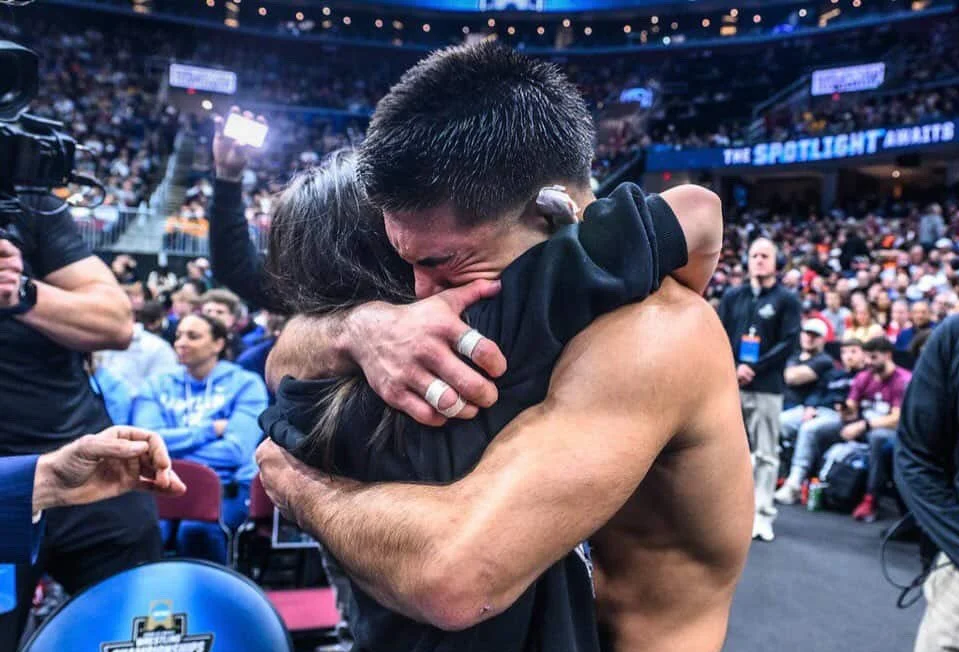
THE EMBRACE WITH MY BROTHER —"I did this for her." The moment that will live with me forever.” Watch →
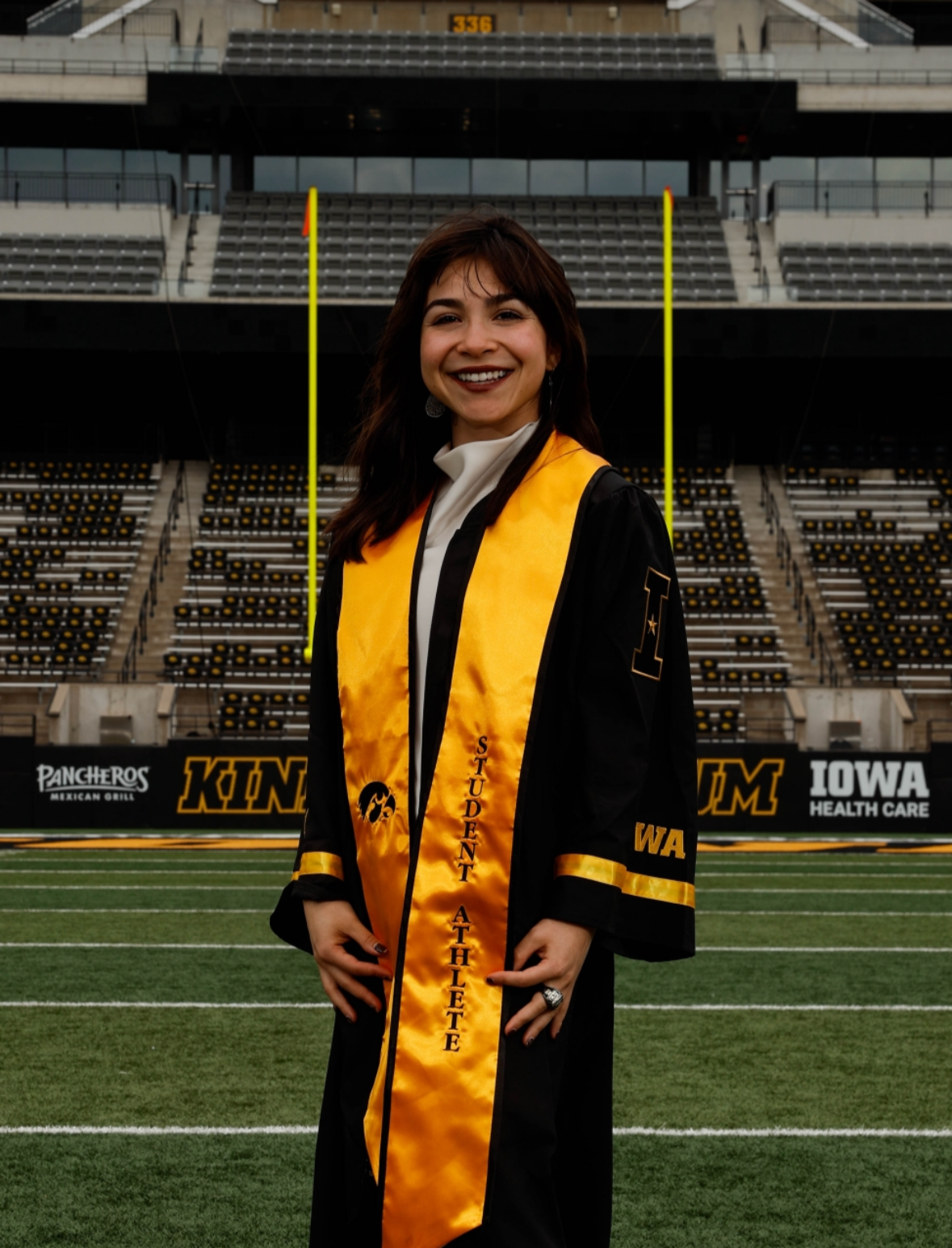
A NEW BEGINNING — Four years. Three ACL tears. One decision that changed everything. I walked into Iowa as a wrestler and I'm walking out as someone who understands exactly why this platform needed to exist. The singlet is retired. The work is just beginning.