YEAR 2 — SECOND ACL TEAR
I thought I understood what it meant to recover. I had gone through the pain, the process, the patience. I had learned to trust my body again. I had returned to competition, found my rhythm, and proved to myself that I was still the athlete I was before the injury.
But healing isn’t linear. And I would soon learn that the likelihood of a retear is significantly higher — especially if you return to sport too early, and particularly if you’re a female athlete.
It happened during a live combat session at the Olympic Training Center in Colorado Springs — a training camp designed to prepare the highest-level athletes for competitions overseas. One tricky position, one moment of relaxation, and the same familiar deep shift in my left knee sent me screaming in pain. Radiating waves stemmed from the side of my knee… my LCL, perhaps?
I was immediately examined by the trainers there, my college coaches by my side wearing looks of fear that it was my other ACL. But once again, I was told:
“Doesn’t appear to be the ACL. There’s a normal amount of laxity. No swelling.”
I had learned to take those words with a grain of salt — nothing would confirm a suspicion like the MRI. My swelling quickly worsened by the hour, and my knee grew more unstable. I crutched around the complex, moving from one location to the next at a snail’s pace because any slight shift in my knee would send radiating waves of pain through my leg. It felt as if the bones of my knee were barely hanging by a thread — and that concerned me. But I chose to be optimistic. I locked away my fear and again held onto the trainers’ words: it was likely just damage to my LCL and would surely heal on its own.
At 6:00 a.m., the MRI notification came through on my phone. I opened the message without preparing myself for the worst possible scenario. I had blocked out that possibility. And yet, the first sentence read:
“COMPLETE TEAR TO THE LEFT ANTERIOR CRUCIATE LIGAMENT.”
My stomach dropped. My breath thinned — like I had suffered a blow to the chest. I was stunned, motionless, staring at a reality I didn’t think I’d have to live through twice. The thought of undergoing a second surgery, of missing another year, of restarting all the hard work I had poured into my other knee — it felt as though my body had betrayed me.
The injury itself felt worse than the first — sharper, deeper, like my body knew what was coming. Mentally, it was even harder. Because now I knew exactly how long the road back would be.
Then the light began to shift.
Yes — the injury was heartbreaking. The surgery was difficult. But this time, something felt different. The pain was far more tolerable than the first time. Within days, I was walking without crutches. When I woke up from surgery, my mindset had already turned a corner. I was no longer weighed down by dread and doubt. I was recharged with positivity. Energized. I had moved past the fear and grief and into a space of renewal.
I knew I’d be out for the entire year. I didn’t try to fight that reality. Instead, I chose to embrace it. I wasn’t going to rush back too soon — I had already lived the consequences of urgency. This time, I chose intention.
For most of my life, I believed my identity was tethered to wrestling. It was the lens through which I measured my worth — the reason every win felt euphoric and every loss felt personal. I poured everything into the sport, not realizing just how tightly I had wrapped my self-esteem around it.
What I hadn’t acknowledged — until injury forced me to stop — was how harsh I had been on myself. How much I had chased perfection. How often I critiqued every mistake as if it defined me.
I was always moving fast — focused on the next match, the next cut, the next opportunity. I never gave myself permission to slow down. I never asked myself why I was pushing so hard — or who I was beyond the pursuit.
But my injuries forced me to take a pause. And in that stillness, I began to discover the parts of myself I had overlooked — the parts that didn’t need a medal to feel proud or seen.
I threw myself into my work as a research assistant in a bone healing lab. I volunteered in a hospice care unit. I found meaning in being present for others — whether that meant sitting with a patient or showing up for a teammate. I immersed myself in my community, in my studies, and in the quiet parts of life that sport had always kept on the sidelines.
I began preparing seriously for medical school — shadowing surgeons and exploring opportunities to understand the field. Medicine is not just a backup plan. It is my future — one that I’ve been building toward since I was five years old. Academics became a place I could pour my energy — a healthy distraction, yes, but also a deeper sense of purpose.
And something began to happen. I discovered a new version of myself — a version that was still competitive, still focused, still disciplined, but more grounded. More fulfilled. It was as if each injury had peeled away a layer I didn’t realize I was hiding behind. I wasn’t becoming someone else. I was becoming more me.
As I progressed on the mat again, I felt sharper — more in tune with my body than ever before. The fire was burning brighter than ever — but this time, I had learned to guard it with caution. I no longer rushed to prove myself. I didn’t compete to escape doubt. I trained with purpose, but I also listened — to my mind, to my body, to the quiet reminders that strength doesn't always mean going harder. Sometimes, it means knowing when to hold back.
But that doesn’t mean it was always easy. Many times, I allowed myself to take off the mask I wore so well in front of others — the one that showed I was okay when I wasn’t. When I let myself feel the weight of it, the tears would come. The fear of falling behind. The fear that my goals were slipping away.
And yet, through all of it, I found something within myself that was even sweeter than winning a medal.
I found worth beyond performance. I found strength rooted not just in what I could do — but in who I was becoming. And that was exciting. The possibilities felt endless. The future looked bright.
I knew I would rise again, stronger than ever before…
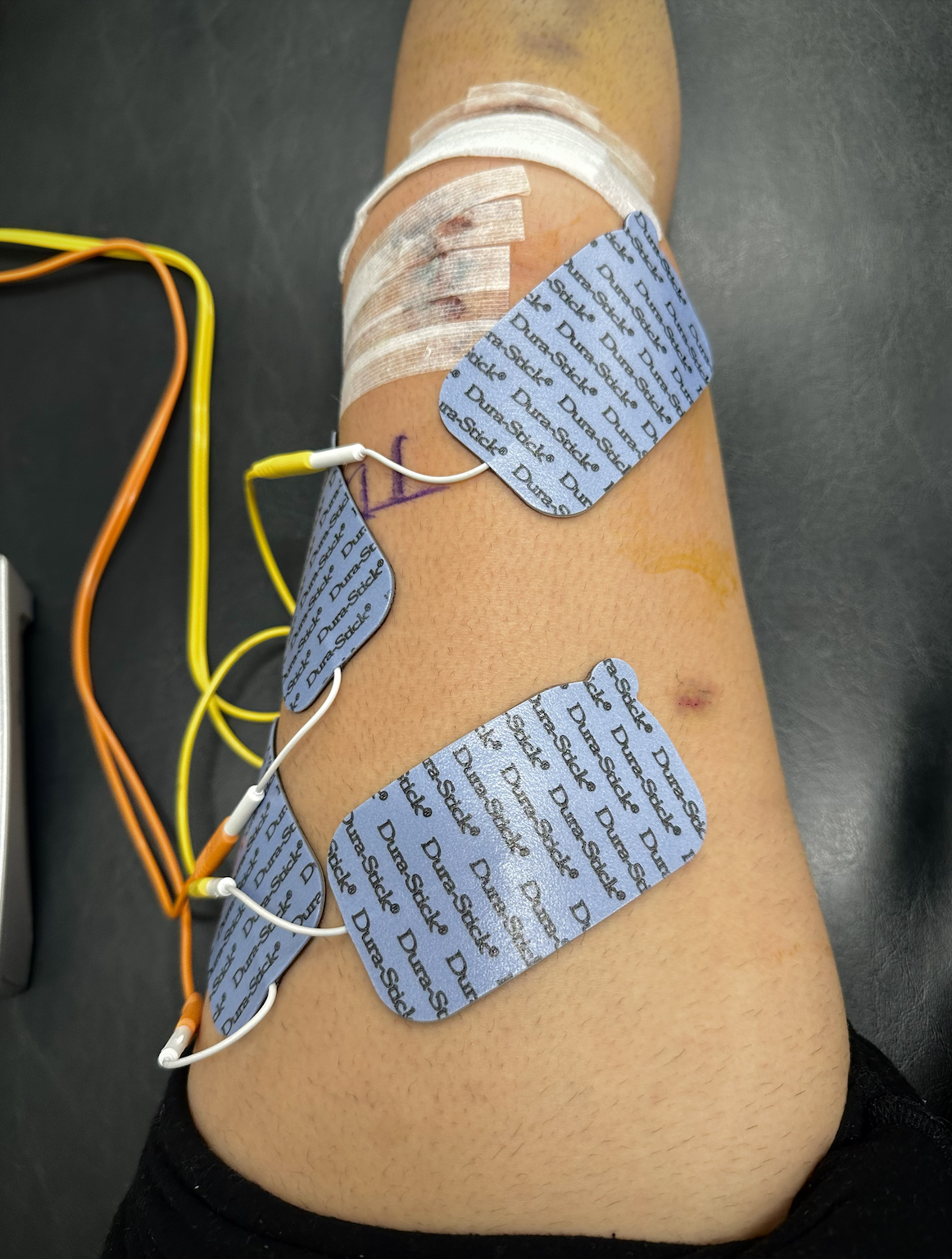
DAY 7 POST-OP — Pain was already much more tolerable
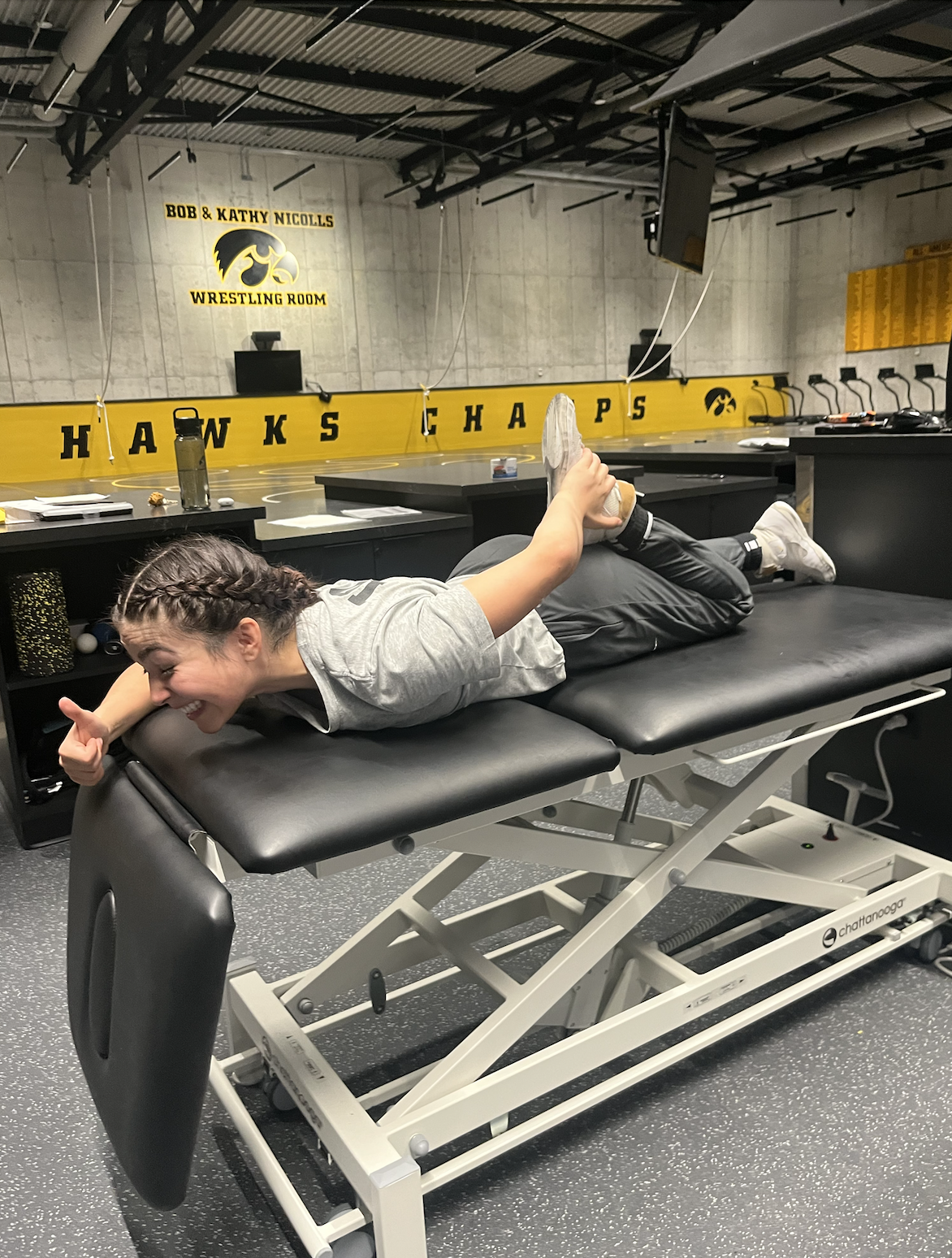
MONTH 2 POST-OP — Second time breaking 90 degrees with flexion
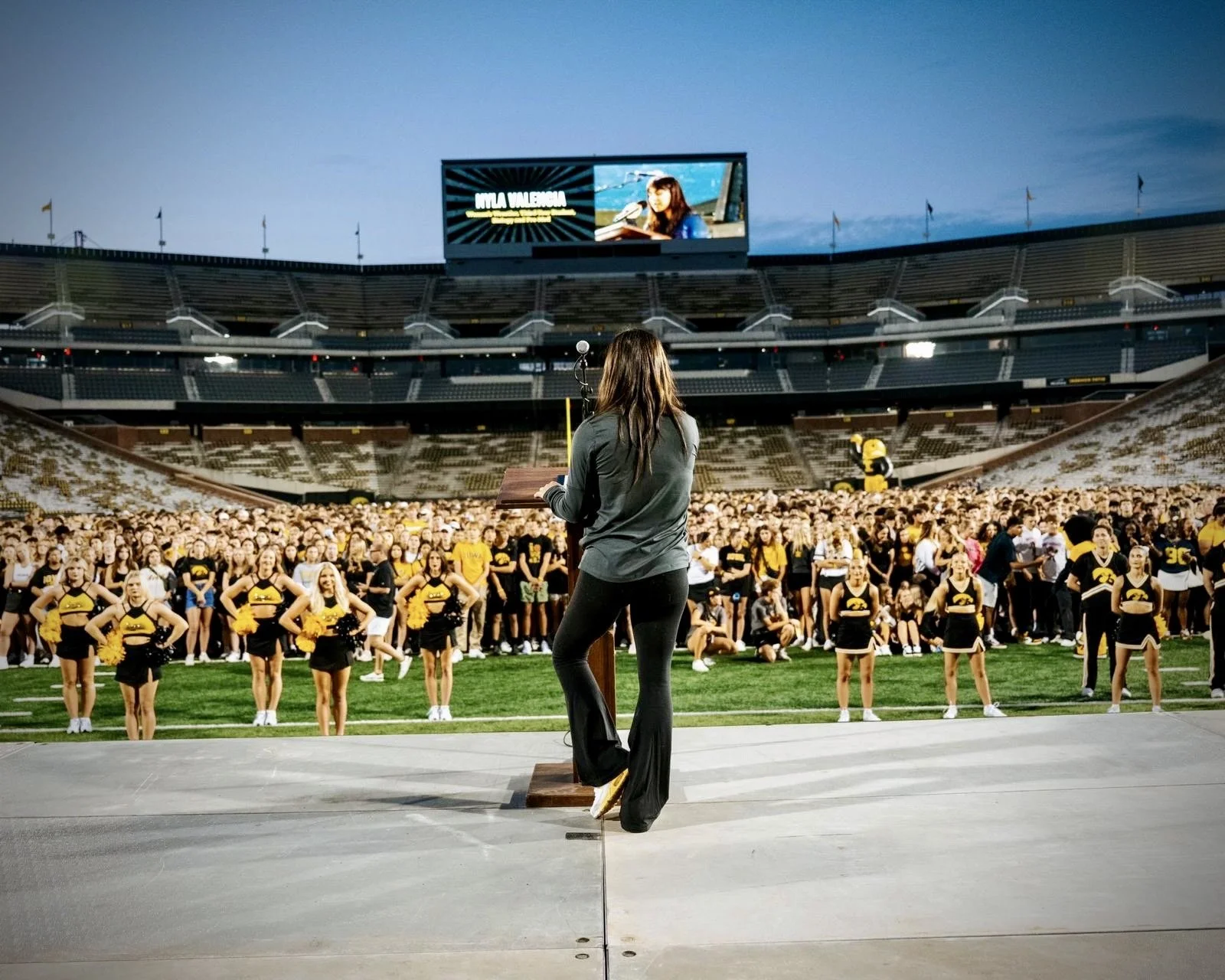
KEYNOTE FRESHMAN ORIENTATION SPEAKER — This night, I stood in front of thousands of students welcoming them to campus and sharing my story
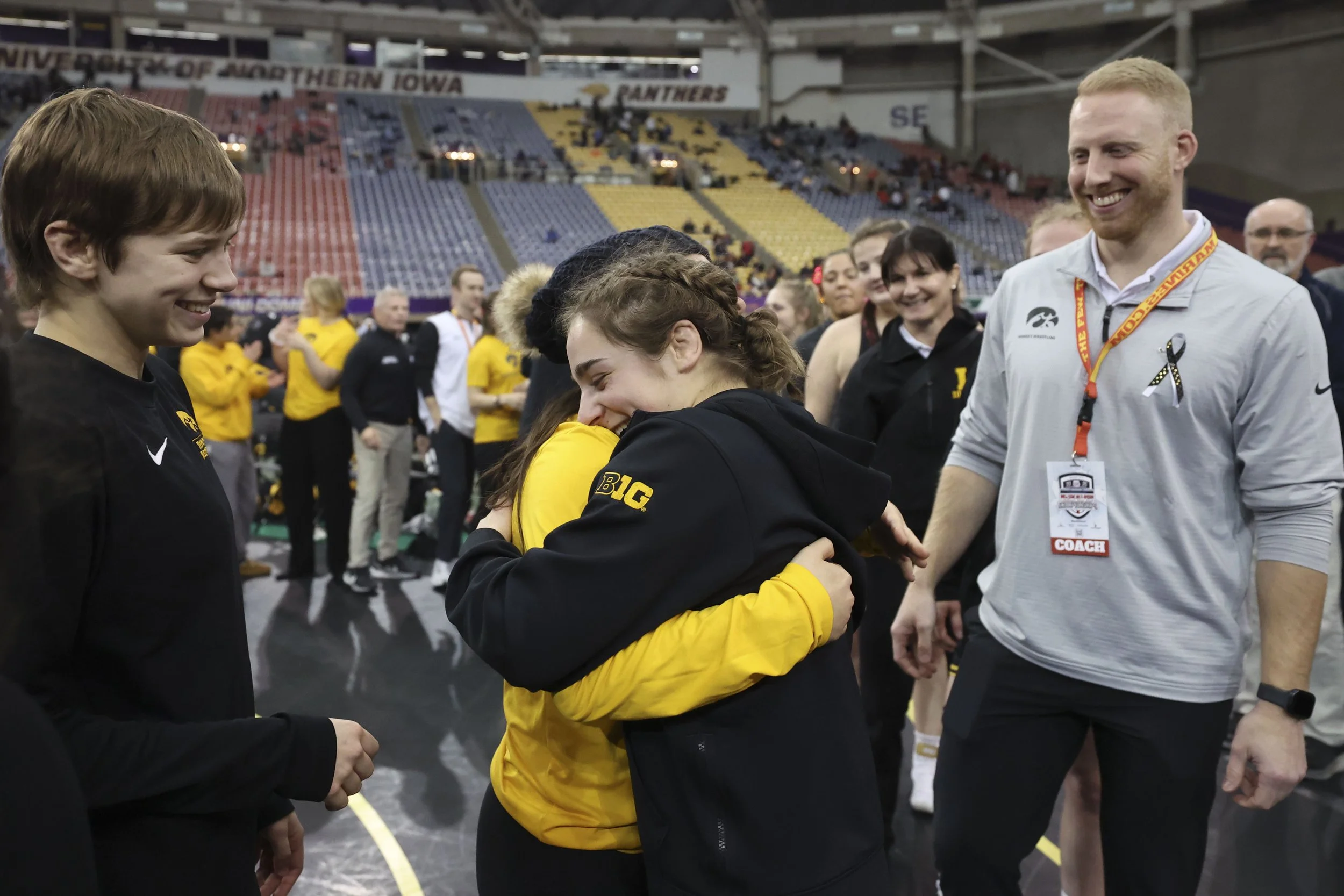
A moment of celebration after my team won their third national team title.
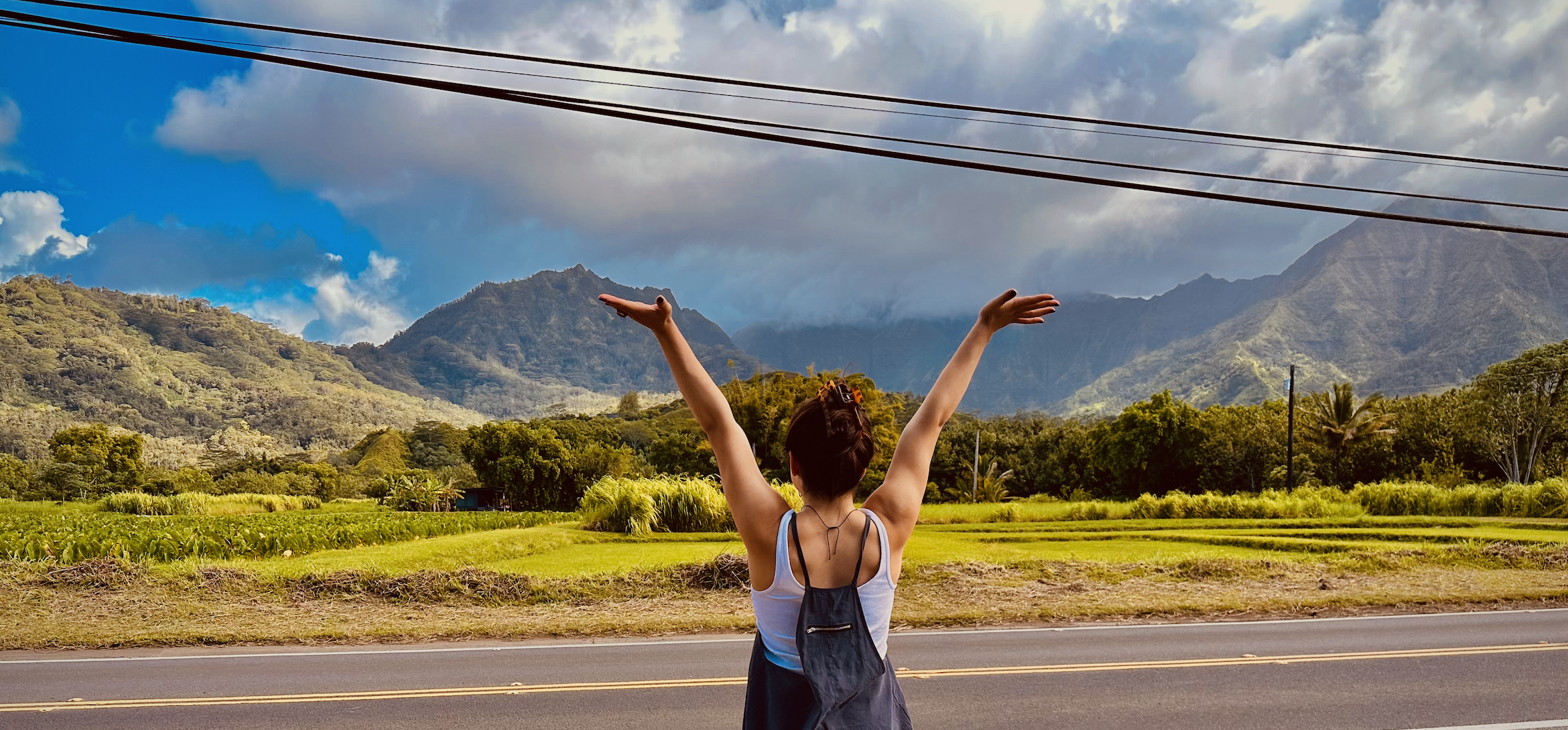
Somewhere between loss and healing, I found myself again — grounded, grateful, and looking forward.