Lauren Werner — Grounded in Consistency, Built on Trust
PRIMARY ATHLETIC TRAINER | UNIVERSITY OF IOWA
“Half the battle is getting your brain to tell your tissues that what you’re doing is safe.”
Lauren Werner’s approach to injury recovery is rooted in evidence-based frameworks, personal experience, and creative clinical thinking. Her philosophy isn’t just about healing tissue—it’s about retraining the nervous system, rebuilding strength, and empowering athletes with autonomy and resilience.
At the heart of her method is the Baseball Diamond of Recovery, a metaphor she made to map out the non-linear, progressive journey of returning to sport. By blending structured benchmarks from the MOON ACL Protocol and the UW Health ACLR Adult QTG with athlete-specific flexibility, Lauren guided me through both of my ACL reconstruction recoveries with intention and clarity.
The Baseball Diamond of Recovery
Home Plate → 1st Base: Pain and Inflammation Management
Post-op focus is managing pain (medications, ice) and reducing swelling (compression, elevation, gentle movement)
Early quad activation helps reduce edema and re-engage the body’s lymphatic response
1st Base → 2nd Base: Restoring Full Range of Motion & Muscle Activation
Focus shifts to regaining pain-free mobility and re-establishing quad control.
2nd Base → 3rd Base: Strength Development Beyond Gravity
Gentle loading evolves into light resistance work
Movement quality is key: Lauren watches for compensations before increasing complexity or intensity
3rd Base→ Home Plate: Load, Perform, Return
Progressive, periodized strength training begins under close supervision
Return-to-sport drills involve power, absorption, and mental reactivity
Athletes undergo isokinetic strength testing at 6 months, targeting ≥90% limb symmetry.
Recovery with Autonomy and Boundaries
Lauren meets each athlete with a grounding question: “What do you want to do today?” Then she finds the safest, smartest way to make that goal fit the recovery phase.
Whether it’s bike sprints, pool work, or ladder drills, Lauren adapts rehab to suit both body and mind.
“Talking to the joint” becomes a nervous system reset- convincing the brain that motion is no longer a threat.
Her mix of structure and creativity makes rehab feel personalized, even empowering.
Red Flags: When to Push Back
Lauren encourages athletes to advocate for themselvs. Watch for:
No isokinetic testing before clearance? That’s a red flag.
Still lifting <30 lbs weeks into rehab? You’re being underloaded.
A provider clears you without a progression plan? That’s not safe.
“Just because your doctor clears you doesn’t mean you’re ready to jump back into full-speed training.”
Recovery Mindsets Lauren Lives By
Lauren believes healing is earned through consistency — not shortcuts. Her favorite qualities in recovering athletes?
Patience with an open timeline
Obsession with the small wins
Grace on bad days and grit on the rest
“This is a brutal recovery. You need grace, patience, and a mindset that honors the small wins.”
She also insists on:
Prioritizing aerobic and anaerobic fitness before sport-specific training
Never skipping the basics: ROM muscle control, balance, force absorption
Making rehab a shared process — not a rigid script.
Personal Reflection — What I learned
Recovering from two ACL surgeries with Lauren as my athletic trainer shaped the way I think about healing — physically and mentally. One of the biggest lessons I learned was patience. Not the kind that’s passive or waiting for time to pass, but active patience — the kind that comes from trusting your body while doing the slow, often uncomfortable work of rebuilding it.
Lauren taught me that strength isn’t just about how much weight you can move. It’s about how you move, what you’re compensating for, and whether your brain and body are actually working together. I learned to focus on movement quality instead of progress shortcuts. I also learned that rest is just as much a part of training as effort. That you can want to push harder and still choose to hold back — because holding back is sometimes the stronger choice
More than anything, Lauren’s approach gave me a way to think differently. She helped me frame setbacks, respect the phases I was in, and find peace with slowing down — without losing my drive to come back better.
Top 3 Things I Took From This Approach
1. RECOVERY ISN’T LINEAR — IT’S LAYERD
The Baseball Diamond Metaphor helped me understand that I couldn’t skip steps. you can’t go from pain to plyometrics overnight. Each base builds on the last, and Lauren made sure I never moved forward without earning it.
2. QUAD STRENGTH IS NON-NEGOTIABLE
I used to think running meant I was close to being “back.” But Lauren showed me that without real, tested quad strength, I was just risking swelling and setbacks. I now understand strength symmetry isn’t optional — it’s essential.
3. ANATOMY WITHIN STRUCTURE MAKES REHAB SUSTAINABLE
Lauren always asked me, “What do you want to do today?” That question reminded me that even in th structure of rehab, I still had agency. Having space to co-create my rehab — safely — kept be engaged, motivated, and mentally connected to the process.
LAUREN’S RECOMMENDED RESOURCES
1. The Moon Protocol →
The MOON (Multi-center Orthopedic Outcomes Network) ACL protocol is a widely used, evidence-based rehabilitation framework for ACL reconstruction recovery. It emphasizes a criteria-based progression rather than a fixed timeline, focusing on restoring range of motion, building quadriceps strength, and ensuring limb symmetry before advancing. The protocol includes phased goals, clear strength and mobility benchmarks, and typically recommends isokinetic testing around the six-month mark to assess readiness for return-to-sport activities. Its structured, milestone-driven design helps reduce re-injury risk and support long-term outcomes.
2. UW Health Sports Rehabilitation Guidelines →
The UW Health Sports Medicine Rehabilitation Guidelines offer comprehensive, evidence-based protocols to assist athletes in recovering from various injuries and surgeries. These guidelines are structured into progressive phases, each with specific goals, precautions, and criteria for advancement. They emphasize restoring range of motion, building strength, and ensuring functional readiness before returning to sport. The approach is individualized, taking into account factors like the athlete's age, injury severity, and personal goals, to promote safe and effective recovery.
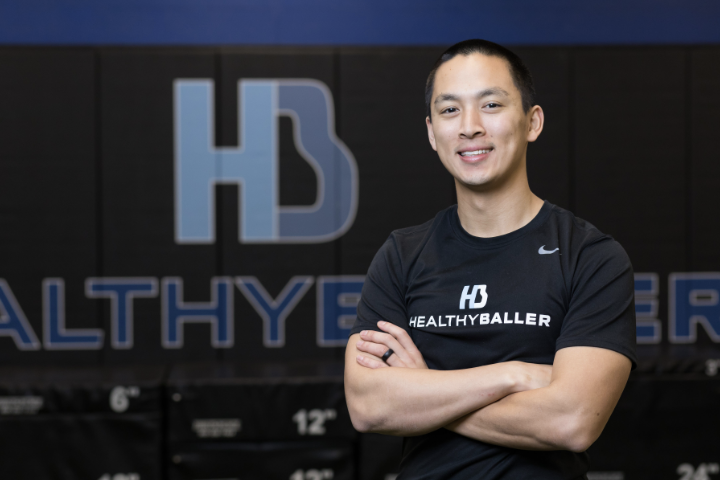
𝐖𝐞𝐬𝐥𝐞𝐲 𝐖𝐚𝐧𝐠, 𝐏𝐓, 𝐃𝐏𝐓 - 𝐀𝐂𝐋 𝐑𝐞𝐡𝐚𝐛 𝐒𝐩𝐞𝐜𝐢𝐚𝐥𝐢𝐬𝐭
Follow him on Instagram @wesleywang.dpt for high-level rehab exercises, evidence-based ACL insights, and practical return-to-sport strategies.
Clinician Insight Box: What Lauren Learned From My Recovery
〰️
Clinician Insight Box: What Lauren Learned From My Recovery 〰️
“There were days after your first surgery where I went home and cried. Not because you weren’t doing the work—but because I knew I had to make you move your knee, even when it hurt. I knew it was the right thing, but it didn’t make it any easier.”
Working with me during both ACL recoveries challenged Lauren in ways she didn’t expect. She described the first one as one of the most difficult moments in her career—not because of protocols or exercises, but because of the emotional weight. She wasn’t just trying to help me regain motion—she was learning how to hold space for pain while still pushing me forward.
“You weren’t just an athlete to me. You were someone I cared deeply about. That made it harder, but also more meaningful.”
In return, my process pushed her to grow as a clinician. She got more creative, more flexible, and more curious. She looked for new exercises, new perspectives, and new ways to keep me challenged without repeating the same formula. Our work together became more than rehab—it became a partnership rooted in trust, honesty, and emotional grit.