
Carbs for recovery + rehab Capacity
RebuildYou | The Big Rocks v1.0 • Jan 2026 • Educational Resource
When you’re healing, carbs aren’t “extra.” They’re support. When I was rehabbing, I didn’t treat carbs like a performance-only macro anymore. I started treating them like capacity—the thing that helped me show up steadier to rehab, keep my energy more consistent, and stop feeling like recovery was always lagging behind. Most athletes don’t have a “carb knowledge problem.” They have a fear + pattern problem—especially when training volume changes. This page is meant to be supplemental and practical: how carbs support rehab and healing, what under-fueling looks like in real life, and how to adjust without turning your life into a spreadsheet.
Disclaimer: Educational only. Not medical advice. For personalized targets, medical concerns, or weight-class goals, work with an RDN.
The Carb reality Check
Some athletes cut carbs the moment they get injured because it feels logical:
“Less training = less carbs.”
But recovery doesn’t work like that. Your body is still doing expensive work:
rebuilding tissue
adapting to rehab stress
managing inflammation
maintaining muscle
supporting mood and sleep while stress is higher
Carbs don’t just power movement:
Supports tissue repair by helping you meet energy needs
Protects muscle when total intake is low
Supports mood + sleep when stress is high
Supports rehab performance because PT is training
Small note (safe + simple): glycogen storage is linked with water storage, which is one reason carbs can affect how you feel physically (energy + hydration steadiness).
CARB PATTERNS THAT can LOOK NORMAL — BUT DON’T SUPPORT RECOVERY
These are the sneaky ones I saw constantly (and fell into myself):
Carb avoidance disguised as “clean eating”
Meals become protein + veggies only… which sounds “healthy,” but doesn’t always support energy or rehab capacity.“I’m not training, so I don’t need carbs”
Rehab still counts. Your body still needs fuel.Random snack days
Coffee, bars, handfuls of things, long gaps, then one big meal at night.Rehab on empty
You don’t need a perfect meal, but showing up with nothing usually makes the session heavier.All carbs, no structure
You do eat carbs, but it’s inconsistent—big hits some days, none the next.
Bottom line: You can’t build recovery on guesswork. Before you change anything, you need a clear view of your pattern.
CARB DISTRIBUTION (What it means in recovery)
For a while, I treated carbs like a morning-only thing. I’d have them at breakfast—oats, toast, fruit—then I’d tighten up the rest of the day and convince myself lunch and dinner didn’t need them as much. In my head, that was “clean” and disciplined.
In reality, it made my day uneven. Rehab would hit and I’d feel flat, then I’d spend the evening trying to patch the energy gap. What changed wasn’t adding a ton of carbs — it was letting them show up beyond breakfast. Once lunch and dinner had a real carb presence, my energy got steadier, my mood was better, and I stopped feeling like I was always playing catch-up.
What an athlete recovery pattern can look like:
breakfast: quick / low fuel
lunch: random / light
rehab: demanding
dinner: big meal with most of the carbs
That might feel normal, but for me, it often led to:
more fatigue during the day
bigger hunger swings at night
less stable rehab performance
feeling like recovery is always behind
What distribution actually means: carbs show up more than once.
Not as a strict rule—just as a strategy to keep energy steadier.
“QUALITY” WITHOUT OBSESSING
HOW I CHOSE HIGH-IMPACT CARBS
Initially when I heard “carb quality,” I assumed my carb choices needed to be specific and perfect.
That’s not the goal.
What I learned is that carb quality matters most when it helps you do two things:
Keep energy more stable
Make meals easier to repeat
High-impact carb staples (recovery-friendly + realistic)
oats / granola
rice / quinoa
potatoes / sweet potatoes
pasta
bread / tortillas
fruit
cereal (yes, it can be a tool)
I didn’t need to label foods as “good” or “bad.”
I needed options that fit my schedule and didn’t fall apart under pressure.
WHEN TO GET SUPPORT (Sports Dietitian / Nutrition Team)
Consider getting support if:
you feel chronically flat or foggy
you’re having big hunger swings or sleep is off
you’re dealing with GI issues consistently
weight-class pressure is affecting your relationship with food
you want a plan that matches rehab demands without guessing
What an RDN can do that a website can’t:
personalize targets to your injury + schedule
troubleshoot timing + digestion
build a plan around dining halls/travel/busy weeks
help you fuel without triggering weight anxiety
Bottom line: if carbs feel confusing, scary, or chaotic, don’t white-knuckle it alone.
My QUICK SELF CHECK
Do I eat a real carb source at breakfast most days?
Do I eat a real carb source at lunch most days?
Do I go into rehab/PT with something in me—even small?
Do I crash in the afternoon and get hungrier at night?
Do I feel flat, irritable, or foggy on rehab days?
How I Interpreted It:
If I answered “no” to two or more of the first three, I didn’t need a complicated plan — I needed consistency.
THE SIMPLEST WAY TO ADJUST DISTRIBUTION
Here are three options that were recommended to me by my nutrition team…
Option A: Add, Don’t Overhaul
I kept my meals the same, but added a small carb.
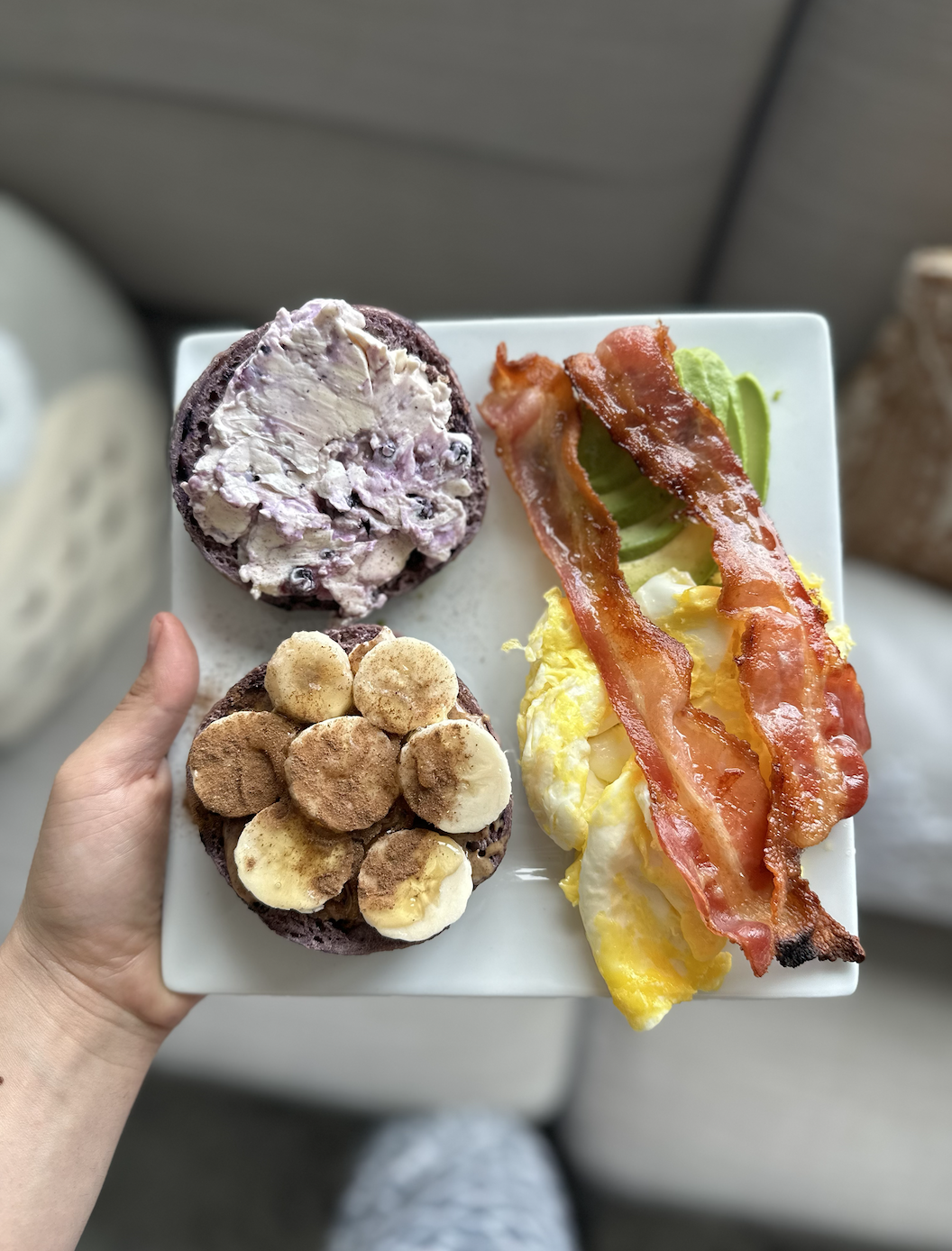
fruit with breakfast
oats/granola with yogurt
toast/tortilla with eggs
rice/potato with lunch
Option B: Stop Relying on Dinner
I’d choose breakfast or lunch and make sure it had a clear carb and protein component.
This was the change that made rehab days feel less chaotic.
Option C: Pick a Carb Anchor
I chose a carb I could repeat without thinking:
oats
rice
potatoes
bread/tortillas
pasta
fruit
Carb anchors aren’t glamorous. They’re effective.
LOW APPETITE / POST-OP DAYS
If my appetite was low, my goal wasn’t to force a massive meal. It was to keep fueling —because I knew my body was doing heavy work even when I didn’t feel hungry.
Post-op days can make food weird. Pain, meds, stress, less movement, and a changed routine can all mess with appetite and digestion. For me, the win wasn’t “eating perfectly.” It was staying consistent enough that I didn’t slide into under-fueling without noticing.
What helped me:
Smaller portions more often (mini-meals count)
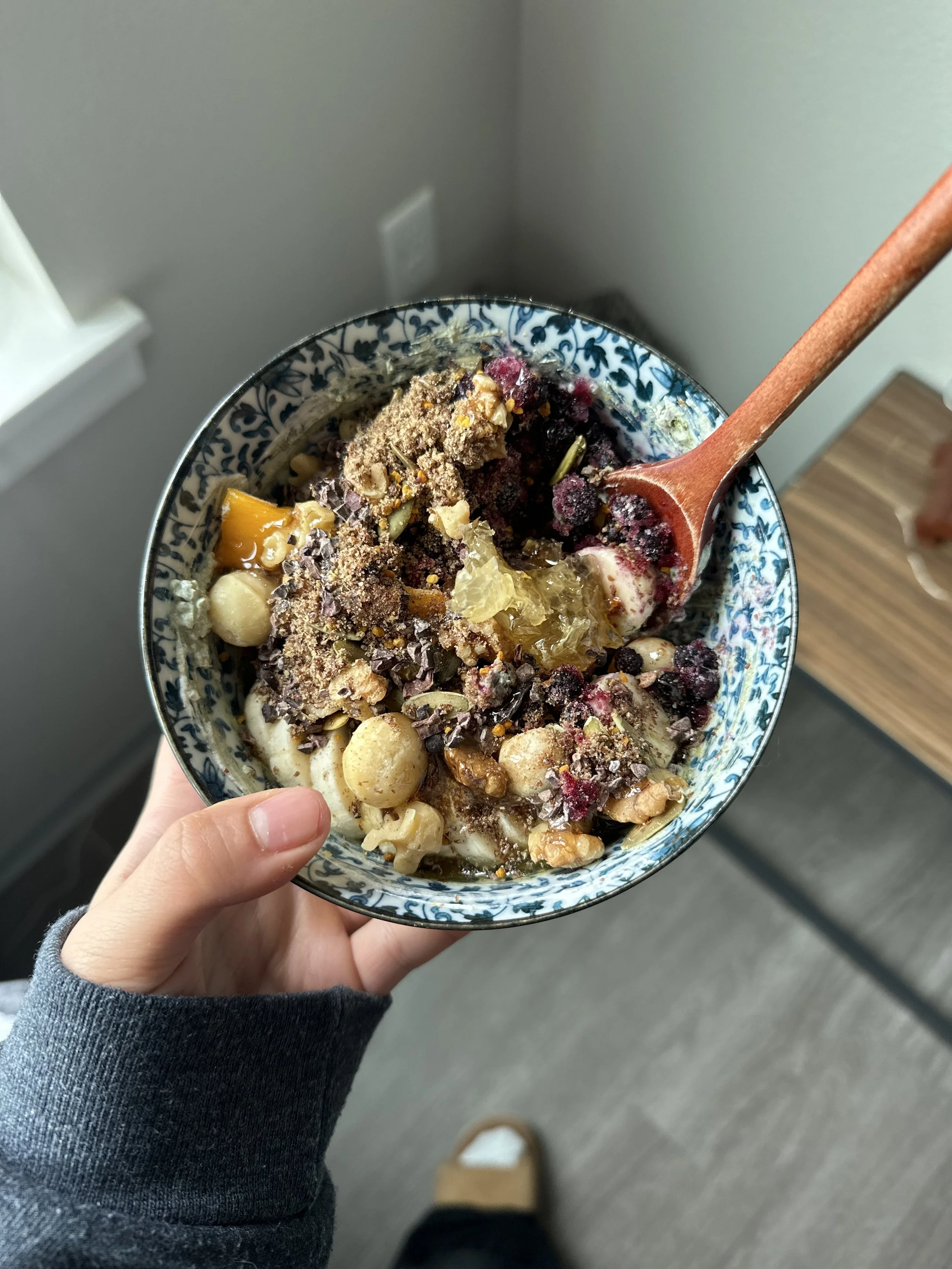
Softer, easier foods when chewing felt like a chore (oats, rice, soup, yogurt bowls)
Liquids when solids felt impossible (smoothies, milk-based drinks, drinkable yogurt)
Default options stocked so I didn’t have to think (a few repeatable foods I could tolerate)
Low-effort combos (examples):
yogurt + fruit (or granola if you can handle it)
oatmeal made with milk + a scoop of protein (or yogurt on the side)
smoothie: milk/soy milk + banana + protein powder (add oats if you want)
rice + eggs (or tofu)
soup + bread + a protein add-on if possible
If you can only do one thing: pair a carb + protein in whatever form you can tolerate. Even if it’s small. Even if it’s not “a real meal.” Recovery doesn’t need perfection—it needs support.
A Note for weight class Athletes
Weight-class pressure can make carbs feel like the enemy. But cutting carbs too hard in recovery can backfire—energy crashes, sleep issues, and rehab sessions that feel heavier than they should. If fueling is stressing you out, or you feel stuck between recovery and weight goals, that’s exactly when a sports dietitian helps.
Sources: ASPDA Downloadables | NATA Injury Recovery PDF | UIOWA Women’s Wrestling Nutrition Team | NSF Certified for Sport